Showing posts with label Star Wars. Show all posts

Friday, April 29, 2016

Book Review: Lord Tedric


    E.E. ‘Doc’ Smith is one of those authors I’ve always been aware of, but never really read. I know his Lensman series is one of the major inspirations for Star Wars, and kinda archetypal Space Opera. With Lord Tedric, he plays with time travel and alternate dimensions, as well as various bits of Science Fiction and Fantasy to tell the story of a man, made god.  

    Maybe I was just not tuned into this one, but I had a devil of a time paying attention. I never really connected with any of the characters or the plot. I feel like there was something interesting at the core, but the execution is lacking. I think there’s a humorous bent to the writing that I simply wasn’t catching. Like in-jokes you recognize but don’t understand.

    One of these days, I’ll finally sit down to the Lensman series. One of these days. But this isn’t going to make that day come any faster.

    This story would later be expanded into a novel and follow-up series by Gordon Eklund. It seems like it became much more of a science fiction-y type thing under Eklund. But this original novella drops its kinda crazy opening for a dull Medieval procedural about knights and kings talking in semi-Shakespearean language.

-Matthew J. Constantine

Thursday, February 18, 2016

Star Trek VS Star Wars


While I’ve written about Star Trek and to a lesser degree Star Wars before, I thought I’d revisit it for a few reasons. First, the recent success of Star Wars: The Force Awakens, a movie that I thought was OK and much better than the previous three films, but not all that great. Second, the recent announcement that a Star Trek TV series is in development. And third, the aftermath of Star Trek Into Darkness (worst Trek film ever?) and the build-up to Star Trek Beyond.


I read an article (see here) that compared Star Trek and Star Wars a while ago, which bothered me. In it, the author postulated that the major difference between the two was that Star Wars was about fighting the Man, and Star Trek was about being the Man. I disagree. Getting past various categorization squabbles (science fiction vs. science fantasy, blah, blah, blah), there are some pretty big differences that separate the two. I’d argue the target audience, for one, is different. Also, the nature of the two is profoundly different. One started as a weekly TV series in the 1960s, while the other started as a blockbuster theatrical release in the 1970s. That difference alone is profound. And when I think of Star Trek at its best, I think of the original series and some of The Next Generation. I don’t tend to think of the films, which from Wrath of Khan on (with the exception of Star Trek IV) are very much more in the Star Wars, summer blockbuster, action film camp.


Star Wars is generally marketed for children. It’s enjoyable for adults, but rarely deals with particularly deep themes or complicated issues. It often relies on gross caricature when presenting characters, so that everyone is on the same page. Good guys are obviously good guys. Bad guys are obviously bad guys. Typically looking at them is all you need to do in order to know what sort of person they are. And the general theme is about as simple as they come, and roots back at least to Zoroastrianism and the duality that would help to form three of today’s major religions (Christianity, Islam, and Judaism). It is the conflict between Good and Evil.


While still frequently marketed toward younger viewers, Star Trek often presents more complicated issues. There are absolutely ham-fisted attempts (see: most episodes actually written by Gene Roddenberry, for example), but there are occasionally subtle ones, too. With Star Trek, the viewer is frequently presented with a moral question. Unfortunately, as was the style of the day, they were then given the answer to that question. But the questions were often serious, sometimes deep questions of morality, philosophy, and meaning. The question wasn’t “do I submit to the horible forces of Evil?” but rather “is it right to do this evil thing for the greater good?” Or, “do I need to make peace with the evil within me in order to better the good?”


Star Wars never grew out of its simple nature. It remains a story of Good vs. Evil. Even as it distanced itself from its Flash Gordon, pulp roots, it moved deeper and deeper into a universe of constantly warring sides in a battle between ultimate Light and ultimate Dark. Villains rarely seem to have any motivation beyond cruelty and the hunger for power.


Star Trek has changed and evolved many times over the years. Unfortunately, more often than not, this seems to have moved it more in line with the Star Wars tradition. Though not going so much for the Good vs Evil line, it has frequently fallen into the trap Batman & Superman have, the “let’s make it darker” trap. Star Trek was a semi-Utopian setting...so let’s show how the Utopia of the Federation is actually corrupt and evil (Deep Space 9). Star Trek was about brave people who faced the unknown of space for the pure joy of it. So, let’s make the characters hate their jobs and be forced into it (Voyager). Star Trek was about big ideas and moral questions. So let’s make action movies that must be solved by the hero punching the villain (the theatrical films). And as time went on, folks behind Trek tried to make it more ‘sciencey’ by throwing in lots of buzzwords and technobabble which muddied the dialog and provided too many opportunities for technological deus ex machina rescues.


But when Star Trek was at its most Star Trek, it wasn’t about ‘being the Man.’ It was about being the best we could be, then striving to be better. Star Wars, for better or worse, was and is about Good vs Evil. Star Trek made young Matt think about what choices he might make, about what it was to be a good person. Star Wars made young Matt say, “AWESOME!” I loved both. And while Star Wars has lost a lot of its charm over the years, thanks to terrible prequel movies and some other issues; and later expansions of the Star Trek universe seem to have lost the thread; I still have fond memories of both. I just find myself going back to Star Trek, watching the original TV episodes, even popping in the original films (the first four, anyway), far more than I do with Star Wars. Star Wars doesn’t give me the same thrill it once did. Though I enjoy the heck out of the first two films. I’m a Science Fiction nerd, and I have a lot of room in my heart. But when it comes down to it, Star Trek at its best is better than Star Wars. There. I said it.


-Matthew J. Constantine

Monday, January 25, 2016

Contemporary Heroes VS Classic Heroes

(So, it's been a while. But here's a new post, where I'm trying to work out some ideas. I'd welcome feedback, as I'm not sure I've got a coherent point yet.)


After recently revisiting the Star Wars universe with The Force Awakens, then going back to the works of Robert E. Howard, and finally watching some of the so-called adaptations of that author’s work, as well as the Edgar Rice Burroughs adaptation John Carter, I was struck again by something I’ve been pondering for some time. Contemporary heroes, those typically in fashion in the literature and film of today, are not like heroes of old. There seem to be two distinct and different types of heroes (I’m sure there are more), the self-driven, self-made, self-motivated hero on the one side, and the externally driven, pawn of fate/the gods hero. And, as I’ve been thinking about this, I’ve noticed that some popular fate-driven heroes of today got their start as self-driven heroes of the past. Batman and Superman are two very well known examples of heroes who were once masters of their own fate, but are now frequently portrayed as slaves to it. And then you have John Carter and Conan the Cimmerian. While Carter is transported to Mars (Barsoom) against his will, he then quickly becomes the master of his own fate, taking up arms and winning the hearts and swords of a kingdom. Conan sets out to experience the world for no other reason than his personal desire to learn and experience new and exciting things. But in film adaptations of both characters, fate seems to have picked each for their appointed task. They have destinies. In the Conan films, this is most egregious, featuring Conan’s family being slain and him being driven/stolen from his home and forced into slavery, then destined to rise up and become king. He does not choose to go, he does not choose to become king. These things are chosen for him by the whims of ...of the gods?

In the cases of Superman and Conan this seems to spit directly in the face of the meaning of the characters. Both are Nietzschean Ubermensch, self-made heroes who stand apart and stand as something for others to aspire to. But in later works, they become more Christ-like, meek servants, who are ultimately slaves to greater forces; pretty much the opposite of the Nietzschean ideal. And Batman now becomes a crime fighter not because he was a man of means who saw that he could do something to help people, but because he was tortured by a crime perpetrated upon him. This seems to say that without the death of his parents, Bruce Wayne would simply have been the care-free playboy he pretends to be. His morality, in this scenario does not come from a personal sense of right and wrong, but from a sense of guilt, shame, and revenge foisted upon him by fickle fate. Much like the argument that without the gods there is no morality. I’ve always been somewhat upset by the idea that some people believe that without religion, they would murder, steal, and rape at will. Without someone forcing their will upon you, you have no will of your own? That idea upsets me. But it seems to be at the root of many contemporary heroes, who are only heroic because fate, god, or someone else forces them to become so. Without an outside force acting upon him or her, he or she would either remain unexceptional. Or worse, would be amoral (ala Bruce Wayne’s persona).

And this brings me to contemporary hero avatar, Luke Skywalker. In a film with self-made heroes like Han Solo and Princess Leia, Luke is the ultimate tool of fate, and this becomes more and more pronounced as the series goes on and we learn more about him and his family. He has nearly no agency, no will of his own. In fact, one of the only things he seems to do on his own, by his own will is go to his room and sulk. Otherwise, he is constantly pushed, directed, prodded, and dragged from hick farm boy to galactic hero. Could there be anyone less like Conan? Could there be anyone more emblematic of the contemporary concept of hero? I recently skimmed (I honestly couldn’t bring myself to read it closely, as I got too annoyed) an article comparing and contrasting Star Trek with Star Wars, which essentially boiled down to Star Wars was about fighting the Man, and Star Trek was about being the Man. But was Star Trek about being the Man? Kirk was constantly standing on his own, his crew was constantly going outside the bounds of law and status quo. To me, Star Trek was less about being the Man, and more about bettering oneself, then giving those below a hand up. Star Wars seemed more about lashing out after allowing cruelty to win for too long; essentially fighting back only after there was literally nothing left to do but die. I mean, they didn’t even give the Empire a real bloody nose until AFTER millions and millions of people had been enslaved and murdered. Fate forced the hand of Luke and the rest of the Rebellion. Only when there was absolutely nothing left to do but something, did they do anything.

So when did the change happen? Why? Am I just off base on all of this? And as a fan of Robert E. Howard’s Conan (and other characters), Edgar Rice Burroughs’s John Carter (and other characters), and other self-made heroes (The Shadow, Allan Quatermain, Beowulf, etc.), is there any hope of them being translated to film or TV without first being sifted through the more modern, meak, fate-driven fashion?


-Matthew J. Constantine

Thursday, February 5, 2015

Comic Review: Prophet: Empire


    The many threads of the many John Prophets are beginning to weave together into a tapestry of marvelous oddity.  In this, the third volume of this Dune-esque science fiction epic, we witness the liberation of Earth, the waking of weapons, and connections to the past.  Hero Johns and villain Johns, and everything in between.


    Prophet is a wonderfully off the wall tale, the likes of which you just don’t see every day.  It’s nowhere near as relatable or friendly as Star Wars or Firefly.  It’s nowhere near as tame as Interstellar or Avatar.  It does not help you, and does not care if you get it.  Prophet is.  Perhaps I’m ascribing too much to Brandon Graham and Co.’s work.  But whatever the case, I’m loving this obscure, out there, trippy, freaky story, writ large on the face of a chaotic universe.


    In previous reviews (volume 1, volume 2), I’ve mentioned the art.  It remains.  I’ve mentioned the ‘similarity’ to The Incal, Dune, Metabarons, and the like.  That is all still true.  It is a series that science fiction fans should be reading.  Seek this out.  It’s a punch in the brain, and it’s awesome.


Prophet: Empire
Authors: Brandon Graham, etc.
Artists: Simon Roy, etc.
Publisher: Image Comics
ISBN: 978-1-60706-858-7

-Matthew J. Constantine

Sunday, September 14, 2014

A Fistful of Influence! (Matt’s Picks)


    OK, everything Brad said in his post on this same subject.  These aren’t necessarily my favorite films, but these are five of the films that shaped who I am as a movie viewer.  Movies have been a big part of my life for as long as I can remember, becoming all the more so when we got a spankin’ new VCR and color TV in the mid 80s.  These movies represent a few important street signs on the road map of my life in film.


5.  Star Wars:  Growing up in the 80s, Star Wars and the renaissance of genre films that followed in its wake was like a warm blanket I wrapped myself in.  The toys, the bed sheets, the Underoos, sure.  But the movies themselves.  To a lonely kid who spent much of his time inside with a TV, the Star Wars films were trusted friends.  And Star Wars itself was the beginning of it all.  I love all things (almost) science fiction, and I never held with the idea that you were either a Star Wars or a Star Trek person (the 60s Star Trek remains one of my favorite TV shows, and if I did a list like this for TV it would be right near the top).  But Star Wars had a lasting impact, even with all the later tainting of my love that came with the dreaded prequel trilogy and overdose of merchandising.


4.  Fist of Legend:  I’d watched a few Chinese martial arts films before I watched this Jet Li film, mostly Jackie Chan stuff.  But it was while watching this movie that I realized Kung Fu films could be more than just stunts and bad dubbing.  They could also be about stuff.  They could also have compelling characters and solid plots.  They could also tap into genuine emotions.  Fist of Legend has some excellent fights, but it’s a good movie, too.  So, in a way, it was the movie that really introduced me to Kung Fu films.


3.  The Phantom Empire: This Gene Autry serial was a very early viewing for young Matt the Lad.  Not only did it make me fall in love with the idea of the movie serial, but I also became captivated by the mix of genres (here Cowboy Musical and Science Fiction).  Over the years, bits of this film were always floating around in the back of my head, leaking into my fiction and into my choices of movie rentals.

What could I possibly have found to like in this?

2.  Coffy:  When I broke up with my high school girlfriend, I suddenly found myself with more time and more money than sense.  Being me, instead of re-directing those resources into doing something that would improve my life, I descended into a black whole of video rental madness.  For a couple years, I watched more movies than I could possibly count.  I mean, I watched EVERY DANGED THING I could get my hands on.  And while I’d been aware of Shaft, and I knew there were Grindhouse films that had been made in the 70s, I was largely ignorant of them, and knew little of Blaxploitation beyond a few articles in film texts.  But one night, walking through the stacks at the local Front Row Video (yeah, it wasn’t even Movie Gallery, yet), I spotted a very sexy picture of Pam Grier looking out at me from a video box.  I was in love, and my movie lust found yet another new direction to stretch.


1.  Raiders of the Lost Ark:  Almost everything about me, my tastes, and my interests eventually leads back to seeing Raiders of the Lost Ark at the old Bangor Opera House when I was five years old.  I wanted to be Indiana Jones.  I wanted to fight Nazis, travel the globe, find ancient cities, have love affairs with feisty brunettes, and live in Hollywood’s version of the 1930s.  Pulp, history, geography, the desert, the jungle, nature, religion, and so many other life long interests started here, not to mention my eventual love and fascination with the films and the era that inspired it.


-Matthew J. Constantine


Friday, September 12, 2014

A Fistful of Influence! (Brad's Picks)


A couple of days ago I was tagged on Facebook by my buddy (& former co-cineAWESOMEr) Jeff Wildman to whip up one of those "15 Movies That Stuck With You" statuses.  I started to type up my Top Ten films, but stalled out...as much as I love those movies, I got nothing else to say about them right now.  They're great.  They sum up my tastes perfectly.  Still, Jeff's status got me thinking.  What are the movies that molded me into the Film Freak that's currently clacking away on this blog post?  Last year, I was lucky enough to capture Martin Scorsese's Jefferson Lecture at the Kennedy Center.  He called it "The Persistence of Vision," and a good chunk of was devoted to discussing the movies that shaped him as a director.  I've been mulling over these films since the lecture, and Jeff's status was just the excuse to get them up on ITMOD.  Again, these are NOT my all time favorite movies.  These are simply the films that steered my tastes.  Some of them seem obvious, a few others maybe not so much.


5.  Pickup on South Street:  Growing up an 80s/90s kid, Black & White was old & boring.  I wish I could claim a youth filled with culture and erudite thinking, but I pretty much matured strictly on a diet of Schwarzenegger & Star Wars (more on that later).  During those early years on the planet, I managed to catch a few of the inevitable classics (Psycho, Casablanca), but they never connected with my dumb kid brain.  In my teen years, as I (and everyone else) was obsessing over Quentin Tarantino, I discovered Samuel Fuller through the documentary The Typewriter, The Rifle, & The Movie Camera.  As guys like QT, Jim Jarmusch, & Tim Robbins gushed over his genius, I got curious.  I first watched The Big Red One, Shock Corridor, & I Shot Jesse James.  I thought they were interesting, but I still didn't understand the big deal.  Pickup on South Street knocked me out.  Despite a plot firmly rooted in The Cold War, Pickup is a mean little crime story with a very modern sense of cynicism.  "Don't Wave That Flag At Me!"  Richard Widmark is one of the most likable unlikable characters ever.  A beautiful bastard that sent me running into Film Noir - The Big Heat, Kiss Me Deadly, Sweet Smell of Success, Touch of Evil.  This set off a chain of events that lead me all the way to Citizen Kane - a movie that genuinely lives up to the hype, as Citizen Kane really is The Citizen Kane of Movies.  Black & White = old & boring?  Only children & idiots believe that.


4.  Death Race 2000:  Kids love all kinds of movies (unless they're Black & White as established above) - Indiana Jones, Airport, Plan 9 From Outer Space.  Good, Bad, Wonderfully Bad. They all live on the same playing field when you're young.  Some kids grow out of the crap films.  Some grow into ironic enjoyment - a nasty trait that I sometimes fall into.  But I'm pretty sure I would be a hipster asshole if not for Roger Corman.  His movies represent a can-do spirit that I find tremendously uplifting, and no other film embodies that "Where There's A Will There's A Way" attitude better than Death Race 2000.  You may not have the budget, you may not have the talent, but you've got an idea.  That's enough to make entertainment.  I love that.  If the world blesses me one Death Race 2000 for every Transformers I have to suffer through than All Is Right.


3.  Hellraiser:  It was a big deal the first time I sat down to watch Clive Barker's original horror.  I was a born scaredy cat.  When I was probably far too young, I braved a peek at both The Shining & Alien, and survived thanks to some strategically placed hand blocking.  Horror held an attraction, but I also worried that it was all Devil Music, a one way ticket to a fiery inferno. Then one day a classmate of mine told me that Hellraiser was cinema's greatest achievement.  I'm not so sure that's true, but to shut him up, I got my hands on the VHS.  It was scary...really freaking scary.  And it was badass.  The makeup.  The gore effects.  The monsters.  I'd never seen anything like it.  I went running to the books. I read the original novel, as well as The Damnation Game.  Clive Barker finally got me to Stephen King, and Stephen King pretty much cemented my interest in spook stories.  It's a genre I don't deal much in lately.  Modern Horror stories feel repetitive if not redundant.  I've got my favorites, I dare you to do better.


2.  Reservoir Dogs:  Before Quentin Tarantino I pretty much got all my entertainment through action movies.  Five minutes into Reservoir Dogs, I discovered that I could get as much enjoyment out of a conversation about Madonna as I could from a lightsaber duel.  1992 was a game changer.  Independent Cinema.  The Auteur theory.  I started reading books about filmmaking.  I became a movie nut, not just a fan.  When Pulp Fiction finally came around I was already preaching Tarantino's gospel.


1.  Star Wars:  I can't even remember a time before Star Wars.  Almost all of my early baby photos feature me clutching upon some Kenner action figure.  Simply put, I would not be ME without George Lucas.  I'm sure the same can be said for a lot of folks my age.  However, I don't really talk too much about it these days.  I spent the first 19 years of my life obsessing over Luke, Han, & Leia but the hurt of The Phantom Menace was so strong that it took several years before I could even watch the original trilogy without the sting of remorse.  You'll probably never see a Star Wars film get recognized on one of my Top Ten lists.  Not just because of the Phantom Menace burn, but because Star Wars is practically fused with my DNA.  I may say that Unforgiven is my favorite film, but Star Wars probably floats in the ether right above it.  It's time to drop the baggage, I need to give Lucas' originals another watch.  100, 200, 300 views?  I can do 301.


--Brad

Wednesday, May 28, 2014

Dork Hero: Shane Rimmer


    One of the great ‘That Guy’ actors, Shane Rimmer has been a staple supporting actor for more than 50 years.  Recently, you might remember him as that guy in control of the waterworks during the climactic battle in Batman Begins.  But go back through the years and you’ll find him popping up in such gems as Space Truckers (“Square pigs!!!”), Out of Africa, Superman II & III, Doctor Strangelove, even Star Wars and three Bond films (as three different guys).  Originally from Canada, he’s spent much of his career in England, frequently playing the American.  He’s got a darned jovial face, and always adds a little something extra to a film.  The perfect quality of a ‘That Guy.’


Five Favorite Shane Rimmer films:
5.  Rollerball
4.  The Spy Who Loved Me
3.  Space Truckers
2.  Doctor Strangelove
1.  The People That Time Forgot

-Matt

Monday, May 26, 2014

Dork Hero: Peter Cushing

Like many of my generation I first became aware of Peter Cushing late in his life, as Grand Moff Tarkin, the real villain of the first Star Wars film (Vader was just a lapdog for Tarkin).  But I quickly saw him in several other films, and realized that he was quite the cool old dude.  As I transitioned into my teen years, he was my gateway drug, getting me hooked on the world of Hammer Horror.  I remain a junkie for bodice ripping, Gothic tinted, British horror/weird films.  Today is the 101st anniversary of his birth.  A tip of the hat to one of the great gentlemen of film.


Five Favorite Peter Cushing Movies:
5.  Star Wars
4.  At the Earth's Core
3. The Curse of Frankenstein
2.  Twins of Evil
1.  She (1965)

-Matt

Sunday, March 16, 2014

Matt’s Week in Dork! (3/9/14-3/15/14)


    On Sunday morning, I finished up Brian K. Vaughan’s Pride of Bagdad, the next selection of the graphic novel club.  I liked the art a lot, but the actual story was a bit obvious and pretty bare bones.  Not bad, but not something I’d ever need to read again.  But then it was off to the races on what ended up being a pretty busy week (including my ranty letter to the makers of Star Wars).


The White Queen:  Considering it’s from Starz, this show is shockingly classy.  Sure, it’s full of nudity and violence, but it’s far less crass and exploitative than Magic City or (shudder) Spartacus.  It tells some of the story of the War of the Roses, with a focus on the women involved in the story.  Though women, particularly when seen through the lens of Victorian and consequently early 20th century histories, have often gotten either a bum rap or completely ignored, the idea that women and men do not share a common history is idiotic (why I’m against the idea of ‘women’s history,’ as opposed to ‘women in history;’ to separate one from the other is to miss the point of it all), and the idea that major historic events didn’t involve women is illogical and counter to common sense.  I like that this series shows the active involvement in the changing politics these women take, while not trying to somehow take away from what the men were doing.  You often see in more female-centered history-based tales, not the building up of women, but the tearing down of men (making them stupid, sex-mad monsters, in much the way male-centered histories of the past tried to cast women as either docile or dangerously predatory [akin to the virgin/whore problem]), so this was a welcome and refreshing aspect of the series, with men and women being shown as all the shades of gray one would expect in reality.  Early episodes were a touch wonky, in part because they brought in a bit of the supernatural, which I found off-putting.  I’m assuming that’s from the novels(?).  It wasn’t needed, and distracts from the more interesting, real story.  And I think adding the magic to the female characters lessened their power as humans, by giving in to that old idea that women can only succeed through magic, manipulation, or subterfuge.  Overall, it’s not as well done as some history based shows, and some of the cast is a challenge to get behind (Max Irons, I’m looking at you!…and I wish I wasn’t).  Still, it’s mostly good and worth checking out, and series lead Rebecca Ferguson is darned good.  If this is the direction Starz is headed, who knows.  Maybe one day they could rival HBO in quality programming.  I’m not holding my breath, but maybe.


The Last Days on Mars:  This film has everything it needs…except a good idea.  The production design, the cast, the music, the setting.  It’s all great.  The film looks fantastic.  But once the central idea is revealed, it turns stupid and never looks back.  Now I can add this to the lengthening list of should-have-been-better Mars exploration films, like Mission to Mars and Red Planet.  All of them have good things going for them, yet all of them are failures, because of bad scripts or poorly conceived ideas.  And this film fits right along side.  I can not stress how annoyed I was upon realizing just how lame the central struggle would be.  There was a grimace, followed by a lot of head shaking, and at least one ‘oh, no.’  Please, film makers.  Please.  Don’t do this again.  It works in a movie like Ghost of Mars, because nobody is going to Ghost of Mars for a serious science fiction film.  It doesn’t work here.  Maybe one day we’ll get an adaptation of Kim Stanley Robinson’s Red Mars that will live up to its potential.  Until then, I guess we’ll just get a bunch of this crap.


Donnie Darko:  This is a movie that really blew me away the first time I watched it.  It broke my brain in all the best ways, stayed with me for years.  But I have to admit, I don’t feel the same awe and wonder I once did.  Watching it again, I still find a lot of things to like in the film, and there are some excellent bits.  But I see more of the ‘first film’ syndrome than I noticed before.  Still a must for fans of the surreal and challenging.  But perhaps not the modern classic I’d have once named it.


Von Richthofen and Brown:  This Roger Corman WWI movie is surprisingly good, with lots of excellent flying footage.  The acting is uneven and there are some technical issues.  But for one of his more serious efforts, it’s a winner.  The star really is the flying, though.  And a lot of that is gorgeous.


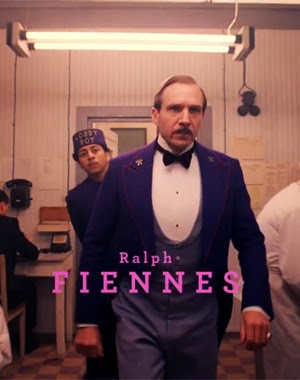
The Grand Budapest Hotel:  Wes Anderson makes a very peculiar sort of film, and he does it very, very well.  This time around he taps into the Golden Age Hollywood madcap comedy films, with plenty of World War II and Cold War allusions.  It’s wistful and nostalgic for bygone eras, but not cloying.  It’s also delightfully crass, and typically surreal.  The by now trademark Anderson artificiality is on display, enhancing the old Hollywood vibe in the sets and backdrops.  The cast is awesome, and it’s so nice to see Ralph Fiennes doing comedy again, and playing someone so dashing (if sleazy).  I love that this movie revels in the wonder and visual craziness of the very medium.  It’s not naturalistic.  It’s not realistic.  But it gets to some truths, even while reveling in its fantasy world.


    Saturday was a crazy danged day.  I assisted Satnam on the set of the film he directed from a script I wrote.  It’s been a danged long time in the works.  I first conceived the idea as something I thought I might be able to do myself, building the ‘set’ in a closet in my old Brewer, ME apartment, about ten or twelve years ago.  Only one cast member, and no camera movement.  I thought I could handle that.  But cameras were too expensive and I had no skill or knowledge of how to do it.  Still, I liked the idea.  Some time after I moved to Virginia, I met someone who expressed interest in filming it, someone with skills and resources.  But it never materialized.  Lots of talk, but no action, and nothing happened.  But after assisting Satnam on a previous film, he said he was looking for another project, and I mentioned my idea.  He liked it enough to want to read my script.  Well…I don’t know what happened to it.  I’m sure if I go searching through my old disks, I’ll find it.  But, I didn’t want to.  So, I sat down and re-wrote it.  And that was it.  A few re-writes, a search for an actor, our fumbling attempts at set construction, finding other professionals to help us out with sound and make-up.  And then filming.  To say I was a ball of nerves is an understatement.  It’s kind of amazing to see words you wrote being spoken by an actor on a set.  I would not be heart broken if I had to do this for a living.


    Now that the movie is in the can, the editing and post production and all that starts up, and I don’t have anything to do with that.  So, it’s on to my next project, prepping for next weekend’s Call of Cthulhu game.  Most of the heavy lifting was done for the first session, so now it’s going to be a lot of details, extra bits, and such.  And then of course, to get myself psyched up and ready to go.  Though it may not be, I could see this being the final session of this game/story.  It might go on to a third or fourth night, depending on how their investigations go, and how deadly things get.  So I'm trying to think ahead for what folks might want to do next.  I think this group would be best suited for something light, fast paced, action and mystery packed, with plenty of room to roam.  I'm still thinking.


-Matt


Thursday, March 13, 2014

Another Open Letter to the Makers of the New Star Wars Films


Once again, to the Powers That Be at Disney,

    About a year ago, I wrote a letter to you folks, and I never heard back.  Since you’re a large corporation, I’m just a guy who writes for a blog you almost certainly have never heard of, and I posted it here as opposed to sending it directly to you, your silence is understandable.  However, more stirrings about the new films, and some general thinking about the state of science fiction and Dork culture has prompted me to try again.  No, I won’t be going on at length about how you should return Star Wars to its roots of pulp science fiction and movie serial fun (though that is a good idea).  This time, I want to address female trouble.


    An article I read a while back got me to thinking about Princess Leia and her place in the original trilogy.  Obviously, she was cute, she was a princess, and she needed to be rescued.  Oh, wait.  She was cute and she was a princess.  But her rescue was secondary (almost accidental), and frankly, once they opened her cell door, she was the one who got everyone out of danger.  In fact, if you look at the series, and look at what she does, she’s kind of the most badass person in the whole thing, and the major driving force behind the toppling of the Empire.  Luke was just a brash kid with some magic tricks.  Han, a bumbling con-man.  Leia was the brains and balls behind the fight.  She’s actually the hero of the trilogy.  Yes, Luke goes through the classic ‘Hero’s Journey.’  But Leia was already there, several steps ahead.  She stood face to face with Vader and Tarkin and didn’t blink.  She was tortured and didn’t break.  She was a leader of the Rebellion.  She sacrificed everything for the cause, and put her life on the line countless times.  Heck, when her rescue of Han didn’t go off quite right and she ended up in that teeny-tiny brass-bikini, she took a chain, strangled a galactic crime boss and then hopped on a blaster turret and started lighting up the place.  Nobody came and got her.  She did that.  She killed Jabba the Hutt with a chain!  And then blew a bunch of stuff up!  Han's stumbling around blind and Luke is doing back flips, while Leia is making it rain (by rain I mean parts of ships and goons).

If I were in her shoes, it'd be brown trousers time.

    So, what I’m getting at is this: in your search for a new star, a hero for a new generation of Star Wars fans, don’t be stupid.  Don’t be DC Comics.  Don’t ignore half the population.  I’m not saying cast a woman to play the central character.  Heck, I’m not saying you should only have one central character.  But I am saying, don’t not cast a woman as the lead (double negative is intentional).  There are many wonderful young actresses out there today, and there are many, many young women who I’m sure would love to see them performing heroics on screen.  And you know what?  There are a lot of young men who would love that, too.  The idea that boys don’t want to see girl heroes is stupid.  Straight up stupid.  Even going back to my childhood, I looked up to Wilma on Buck Rogers, to Wonder Woman, to Marion Ravenwood in Raiders of the Lost Ark, and later to Chris (Elisabeth Shoe) in Adventures in Babysitting.  But I didn’t look up to Princess Leia, because (though on reflection, she’s a darned powerful character) when I saw Star Wars as a child, she was little more than set-dressing, a pretty object to achieve.  And that’s not what we should be giving our kids.  I’m not advocating the now cliché Joss Whedon-style ‘Waif Who Turns Out to be a Super-Ninja’ characters.  (Frankly, if Milla Jovovich isn’t playing that part, I’m probably not buying it).  But compelling and heroic characters for our excellent actresses to play shouldn’t be too much to ask.


    Might I recommend looking into Lupita Nyong’o, Saoirse Ronan (I've heard rumor she has read for a part), or Olivia Thirlby, among so many.  All fine, up and comers.  All capable of doing more than looking pretty.  And why limit yourself to one?  How about two or three or (gasp!) four compelling female characters.  The Clone Wars animated series featured several women as heroes and villains.  No reason not to do that in the movies, right?  Write good parts, cast well, and we can all be happy.  You’ve got a lot of brand loyalty.  You’ve got a massive fan base, and no small number of those fans are women.  You have the ability to push Star Wars into a better place, to make it more than it has been before.  Please don’t make this into another exercise in pandering to your idea of the interests of 13 year old boys.  You have to know that’s not the only audience you’re working with.  Right?  Look at the success you’ve had with the Marvel movies.  Learn from that.  Be better.  Make me love you again.  I want to.  I really do.  So help me out.  Be better.


Thanks for your time.
-Matthew Constantine, Star Wars fan since the late 70s


Friday, November 29, 2013

Book Review: Icerigger


    When I was a lad, my father pointed me in the direction of some Alan Dean Foster novels.  I think he told me specifically about the Flinx and Pip books, which oddly I wouldn’t go on to read for two decades or more.  But none the less, I was fascinated by Foster’s Humanx Commonwealth, and I picked up a handful of books and read them over the years.  Among the first I bought were the Icerigger trilogy…which I again, didn’t read.  Until now.  I found the trilogy as ebooks on the cheap, and figured now was a good time.


    Icerigger introduces us to Ethan Fortune, a merchant looking to make a name for himself and get a cushy job back in the core worlds, caught up in a kidnapping attempt that quickly goes from botched to totally screwed.  Soon, he finds himself one of the survivors of a crash, marooned on a hostile ice world, with no expectation of rescue.  Here we meet, among others, the mad Viking of a man, Skua September.  In Edgar Rice Burroughs fashion, Fortune and September embark on a journey of discovery and adventure, involving inhuman natives, swashbuckling, politics, and romance.


    Foster’s Humanx novels are direct descendants of classic space opera, mixing the pulpy fun of Burroughs’s Mars books and C.L. Moore’s Northwest Smith stories, with the huge scale universe building of Asimov’s Foundation and E.E. “Doc” Smith’s Lensmen.  Similar to Larry Niven, A. Bertram Chandler, and others, he crafted a wide, wild universe to play in, creating galaxy spanning civilizations and local potentates.  Though the action of Icerigger is limited to one world (and briefly, it’s orbital space), you are constantly aware that events take place within a larger setting.  Fortune and September are certainly fun characters to follow.  Fortune is a relatable guy.  Smart, competent, and driven, he’s able to roll with a lot of punches, but still reacts in a way the reader can understand.  September is a wild beast of a man; a hard partier, lover, and fighter.  If I have a complaint about this novel, and I don't know that I do, it's that the story reaches a natural climax and conclusion, only to keep going.  It feels like the book is over, but there's a sort of novella tacked on to the end.  Odd, but not necessarily bad.


    Fans of space opera must check out Alan Dean Foster’s Humanx books.  If you’re only familiar with him from his incalculable number of movie novelizations, forget that and read some of his original work.  His universe is more consistent, and more consistently good than the Star Wars or Star Trek universes, while filling a similar niche.


Icerigger
Author: Alan Dean Foster
Publisher: Open Road Publishing
ISBN: (ebook) 9781453274088

-Matthew J. Constantine

Sunday, October 27, 2013

Matt’s Week in Dork! (10/20/13-10/26/13)


    I’ve been trying to get a lot of reading done, and I have.  But I’m not finishing a lot.  Too many things going at once.  Still, when it comes to geeky stuff, this was a pretty good week for this Dork.  And as I've given it more of a listen, I've been really digging that new Devo CD I picked up.  Which is handy, as it plays right into some of the reading I'm doing about AI and robotics.


In the Mouth of Madness:  “God’s not supposed to be a hack horror writer.”  The last great John Carpenter movie, this Lovecraft inspired journey into madness is fantastic.  It’s just the right mix of creepy, weird, and pulpy, with a great Lovecraftian hero in insurance investigator John Trent.  Nobody pulls his strings.  And he’s on the trail of Stephen King type bestselling horror writer Sutter Cane.  Cane’s writing seems to be having an effect on his readers, and that effect is becoming more pronounced and more violent.  Can Trent find him, find his last manuscript, and get back to civilization?  Or is the Door about to open, letting the Old Ones spill back into our world?


Niagara:  Joseph Cotton and Marilyn Monroe play a horribly dysfunctional couple who seem to be falling apart in their hotel room by the famous titular falls.  When a happy young couple shows up, their worlds collide.  I can see why this movie isn’t necessarily talked about a lot, but it’s pretty good.  It’s got a kind of second rate (and I don’t mean that in a bad way) Hitchcock vibe to it.  Not up to snuff with Hitch’s best, but in that spirit.


The Wall (Die Wand):  Oh, my gosh.  This is a danged sad, danged depressing, and danged fine film.  There are elements of those ‘man alone’ films like Jeremiah Johnson or Omega Man.  But it goes so, so much further.  A grim meditation on profound loneliness, it’s also a sort of love letter to the natural setting of rural Europe.  A woman wakes up to find herself the only living human, locked within a mysterious invisible bubble.  Her only companion is a skittish dog.  It’s a heck of a fascinating movie, and worth seeking out.  Beautifully shot, well acted, and fascinating to see.  And brutally, emotionally devastating.


Gun Crazy:  Two young people go on a bullet flinging crime spree.  A guy with a love of guns and a dame with a taste for money are a match made in Noir heaven.  I really like the way this film is shot.  The sequences where the camera sits in the back seat and just lets them talk as they head into or flee a crime scene are quite good.


    Read volume 1 of the New 52 series Shazam!  I definitely did not find myself as into it as co-Dork Brad.  I think something in the air or water has simply soured me to DC and Marvel.  Could it be the high frequency of terrible stuff they seem to put out?  I’m not sure.  But I’m feeling less forgiving toward them.  If I’d read it a year ago, I’d probably have enjoyed it.  Right now, however, they’d have to be writing some mighty fine stuff for me to give two shakes, and this isn’t it.  I also read (or skimmed, anyway) volume 2 of Aquaman, which saw a drastic drop in quality from The Trench.  It became scattered, confusing, and ultimately, boring.  Sad, as volume 1 was one of the big surprises from the New 52.


Neither the Sea Nor the Sand:  There’s some lovely footage of the UK coast.  Otherwise, it’s a bunch of unlikable, unrelatable characters in weird relationships.  It feels like a student film that got a big budget for reasons I don’t understand.  While well made, it’s quite grating.


    On Thursday night, Robert hosted Triple Horror Movie Night, an annual celebration of October.  Each year, he, Brad and I choose a movie each; one fabulous (Robert), one classic (me), and one scary (Brad).  This year, we changed it up a bit, and I brought the scary (or sleazy) movie, while Brad brought the classic.  A few others joined us, and while I think everyone enjoyed the social aspect, I don’t know if everyone was prepared for just what it is that we were going to be watching.

Brad’s Pick

Macabre:  The plot for this film is just too danged complicated, with too many characters, too many previously dead people, and too many cooks in the kitchen.  It’s also not very scary, even looking at it from the 50s horror movie perspective.  There are flashbacks where you’re not quite sure it’s a flashback, cuts to other scenes where it seems like it might be a flashback…but isn’t.  It’s weird.  Not great.  But worth a watch if you like William Castle movies.


Robert’s Pick

Vampire Boys 2:  If you thought Vampire Boys was poorly made and featured lots of bad acting, you haven’t seen anything yet.  This crappy sequel looks like it was 'filmed' in someone’s basement.  And that’s probably the best thing about it.  Everyone is shot in close-up and nobody has the face for it.  When anyone tries to act, it’s hammy.  And the story is dumb, dumb, dumb.


Matt’s Pick

Cat People:  I absolutely love this movie.  The longer I live with it, the more I enjoy it.  I love the cast and all the characters they play.  I love the kinky love story and the even kinkier obsession story.  New Orleans has never looked better or more like somewhere I’d actually think about visiting.  The slow build takes it to some powerfully strange places.  And the ending is so crazy.


    Then Friday night was the latest meeting of the graphic novel club.  We read the New 52 Aquaman (first two volumes) this month.  The reactions were mixed.  I liked the first volume, but not the second.  Lisa didn’t like the 4th wall break in the first volume (blogger talking about how much Aquaman sucks).  Many found the second volume needlessly complicated and scattered.  But many also came away with a new appreciation of the character.


    After an extremely stressful week (and last couple months), I decided to do a sort of Horror movie day.  I sat on my couch, ate Boo Barry cereal (thanks to Robert), had some snacks, grabbed a Firehouse sub while I was out for a walk in the middle of the day, and enjoyed a day of watching various horror films.  A nice way to spend a Saturday.


Taste the Blood of Dracula:  Three bored rich guys looking for kicks get way more than they bargained for in this Hammer Dracula film.  Overall, it’s not bad, though not especially interesting.  I like that the tale has an unusual plot progression, though the atmosphere is still mainline Hammer.  Fans of the studio’s Gothic thrillers should certainly watch it, but it’s not one of those ‘rush right out and get it’ titles.


Doctor Who: The Talons of Weng-Chiang:  Victorian London is the scene of some sinister goings-on involving a shadowy Chinese cult and a horrible little thing.  It’s a cool story, rooted in Sherlock Holmes tales and that sort of thing, but with plenty of the usual Doctor Who madness.  You would not be wrong to say that there is some outright racism on display.  In part this is reflective of the time the story is set within, but of course, Li H’sen Chang being portrayed by a guy in ‘yellow face’ makes things pretty awkward.  Still, this is the kind of ‘historic’ story that worked best on Doctor Who.  I usually prefer the more out-there science fictiony tales, but the horror themed histories work fairly well.


The Fly:  A reclusive scientist falls for a plucky reporter, then has dirty, unsafe sex with his own genes, getting pumped through of inhuman DNA.  Jeff Goldblum is do danged awkward, and things get really nasty pretty quick.  Watching it, I was struck by how danged weird it was, and how a lot of pretty out-there stuff was made for mainstream audiences in the 80s that would likely not fly today.


Godzilla VS Destroyah:  “What radioactivity!”  Every time I watch one of these later films in the series, I can’t help but pine for the older ones.  There’s some really cool stuff, but the production feels shoddy, the ‘science’ is so extremely stupid, and the human stories are totally uninteresting.  I feel like a lot of the creature sequences would never have flown in the original run.  I like the introduction of a hoard of little creatures, more human sized problems in this one.  Of course, by the end, it’s a giant monster that has to go up against Godzilla.  But it makes me want to see a better Godzilla film that features little things for people to deal with, too.  There have been hints of that before, with radiated parasites left behind my the big guy, but it hasn’t been very well explored.  The Godfather-like assassination of Godzilla is weird, too.


Hellraiser III:  I stalled on my attempted re-watch of the Hellraiser series a while back, in part because I knew this was the next on the list, and I remember really disliking it.  Well, things haven’t changed.  The script for this one, as well as the acting and production design all feel very made for Canadian TV.  The creepy, mysterious, and weird are replaced with awkward cheese.  Totally lacking in any kind of passion or imagination, everything feels so bland and by the numbers that at no point do I care what happens to anyone.  Lifeless.  That’s the word for this movie.  And as a side note, why the hell did Doc get turned into a Cenobite?  There was no indication that this was a path he was on.  It doesn’t just happen to random victims of Pinhead.  It happens to those who seek it out.  F’ing stupid.


Rodan:  Rodan has what I’m looking for in a Kaiju film.  It takes its time, develops a bunch of human characters and follows them through their investigation of strange events.  Then, quite a way into the film, it brings out the big guns and starts the mass destruction.  But the ‘ground level’ story is still a major part.  Rodan is a giant bird, and some kind of master of the wind.  So this movie features lots and lots of stuff getting blown to pieces, which is strange, but kind of cool.  It’s also steeped in the post-Hiroshima fears of fallout and poisoned earth.  Giant mutant grubs are the first thing that tips people off to the problem, and they’re disgusting and creepy.


     I read the first issue of The Star Wars, which is right up my ally.  It's an attempt to adapt George Lucas's original Star Wars script into comic form.  You can see a lot of similarities, but there are also some pretty big differences.  I don't know if it would have worked as well, and maybe some of those changes were needed.  But I like some of the characters more, especially Luke, who isn't a child.


-Matt