Showing posts with label Nietzsche. Show all posts

Monday, January 25, 2016

Contemporary Heroes VS Classic Heroes

(So, it's been a while. But here's a new post, where I'm trying to work out some ideas. I'd welcome feedback, as I'm not sure I've got a coherent point yet.)


After recently revisiting the Star Wars universe with The Force Awakens, then going back to the works of Robert E. Howard, and finally watching some of the so-called adaptations of that author’s work, as well as the Edgar Rice Burroughs adaptation John Carter, I was struck again by something I’ve been pondering for some time. Contemporary heroes, those typically in fashion in the literature and film of today, are not like heroes of old. There seem to be two distinct and different types of heroes (I’m sure there are more), the self-driven, self-made, self-motivated hero on the one side, and the externally driven, pawn of fate/the gods hero. And, as I’ve been thinking about this, I’ve noticed that some popular fate-driven heroes of today got their start as self-driven heroes of the past. Batman and Superman are two very well known examples of heroes who were once masters of their own fate, but are now frequently portrayed as slaves to it. And then you have John Carter and Conan the Cimmerian. While Carter is transported to Mars (Barsoom) against his will, he then quickly becomes the master of his own fate, taking up arms and winning the hearts and swords of a kingdom. Conan sets out to experience the world for no other reason than his personal desire to learn and experience new and exciting things. But in film adaptations of both characters, fate seems to have picked each for their appointed task. They have destinies. In the Conan films, this is most egregious, featuring Conan’s family being slain and him being driven/stolen from his home and forced into slavery, then destined to rise up and become king. He does not choose to go, he does not choose to become king. These things are chosen for him by the whims of ...of the gods?

In the cases of Superman and Conan this seems to spit directly in the face of the meaning of the characters. Both are Nietzschean Ubermensch, self-made heroes who stand apart and stand as something for others to aspire to. But in later works, they become more Christ-like, meek servants, who are ultimately slaves to greater forces; pretty much the opposite of the Nietzschean ideal. And Batman now becomes a crime fighter not because he was a man of means who saw that he could do something to help people, but because he was tortured by a crime perpetrated upon him. This seems to say that without the death of his parents, Bruce Wayne would simply have been the care-free playboy he pretends to be. His morality, in this scenario does not come from a personal sense of right and wrong, but from a sense of guilt, shame, and revenge foisted upon him by fickle fate. Much like the argument that without the gods there is no morality. I’ve always been somewhat upset by the idea that some people believe that without religion, they would murder, steal, and rape at will. Without someone forcing their will upon you, you have no will of your own? That idea upsets me. But it seems to be at the root of many contemporary heroes, who are only heroic because fate, god, or someone else forces them to become so. Without an outside force acting upon him or her, he or she would either remain unexceptional. Or worse, would be amoral (ala Bruce Wayne’s persona).

And this brings me to contemporary hero avatar, Luke Skywalker. In a film with self-made heroes like Han Solo and Princess Leia, Luke is the ultimate tool of fate, and this becomes more and more pronounced as the series goes on and we learn more about him and his family. He has nearly no agency, no will of his own. In fact, one of the only things he seems to do on his own, by his own will is go to his room and sulk. Otherwise, he is constantly pushed, directed, prodded, and dragged from hick farm boy to galactic hero. Could there be anyone less like Conan? Could there be anyone more emblematic of the contemporary concept of hero? I recently skimmed (I honestly couldn’t bring myself to read it closely, as I got too annoyed) an article comparing and contrasting Star Trek with Star Wars, which essentially boiled down to Star Wars was about fighting the Man, and Star Trek was about being the Man. But was Star Trek about being the Man? Kirk was constantly standing on his own, his crew was constantly going outside the bounds of law and status quo. To me, Star Trek was less about being the Man, and more about bettering oneself, then giving those below a hand up. Star Wars seemed more about lashing out after allowing cruelty to win for too long; essentially fighting back only after there was literally nothing left to do but die. I mean, they didn’t even give the Empire a real bloody nose until AFTER millions and millions of people had been enslaved and murdered. Fate forced the hand of Luke and the rest of the Rebellion. Only when there was absolutely nothing left to do but something, did they do anything.

So when did the change happen? Why? Am I just off base on all of this? And as a fan of Robert E. Howard’s Conan (and other characters), Edgar Rice Burroughs’s John Carter (and other characters), and other self-made heroes (The Shadow, Allan Quatermain, Beowulf, etc.), is there any hope of them being translated to film or TV without first being sifted through the more modern, meak, fate-driven fashion?


-Matthew J. Constantine

Tuesday, December 17, 2013

Book Review: Lying


    I like to be challenged.  People might not think that about me, because I have a strong inclination to resist change and my suspicion of fixing things that don’t appear to be broken is quite deep.  But it’s true.  I like to be challenged.  I think that’s why I found myself genuinely enjoying reading Nietzsche (for fun, not for a class or something).  And I’m sure it’s why I developed a fondness for the forthright and provocative works of Christopher Hitchens, Penn Jillette, and Sam Harris.  I first encountered Harris through various web videos of debates and speeches, often on the subject of religion and the rejection thereof.  But by the time I found him, that was no longer a challenging subject for me.  He may have helped me find better ways of saying what I meant, but I had already come to terms with my lack of belief in the supernatural.  Where he began to challenge me was in his book The Moral Landscape.  In my gut, I’d never felt right about some of the moral relativism that my 80s-raised mind wanted so much to hold on to.  Something didn’t sit right when it came to justifying barbaric acts in the name of cultural sensitivity, standing silent when I knew in my very bones that something evil was afoot.  And with The Moral Landscape, Harris challenged my thinking, and helped me forge that discomfort into a more coherent and I hope productive way of looking at the world.


    With Lying, Sam Harris has challenged me once again.  As a general thing, I consider myself an honest person.  I suppose most people do, but I have a long standing tendency to call it as I see it (not necessarily as it is) and to play as fair as I can with folks.  Admittedly, I’ve often used silence as a means of avoiding saying truths that might put me in socially awkward positions.  But generally, I’ve tried to be an honest person.  Or so I thought.  Reading Lying, I see that, while on a spectrum, I might be on the honest side of the middle, I still perpetuate our culture of lies.  I’m not a disciplined person.  I’m not going to lie here and say that I will be embracing a strictly and more thoughtfully honest life from this point forward.  It’s not that I don’t think it’s possible (though it would be difficult as I did grow up Catholic, where honestly, especially with oneself, is not generally well received or encouraged).  It’s that I know myself well enough to know that my commitment to being more thoughtful and honest will not be as deep and conscientious as it should be.  Still, the book challenges me to be a better person, and to think more about the damage that lies, even so called ‘white lies’ can do.  I do think that going forward, I will be more careful about telling the truth, more apt to avoid even those socially lubricating fabrications.


    The idea of living in an honest society, a conscientiously honest and straight-forward world, absolutely appeals to me.  And the goal Harris seems to have of shifting our cultural mindset in that direction is an honorable and important one.  Lying seems like the sort of book that should be read by as many people as possible, but probably won't be read by those who could be most served by it (like The Moral Landscape).  Being in business, I can see the need for this book in the business community.  But the medical, governmental, educational, and other arenas could all use a healthy dose of self-reflection and positive reinforcement of honest speech and behavior.


    The book, originally an e-book, now comes in a hardcover edition which features a Q&A between Sam Harris and Ronald A. Howard, a man who was a huge inspiration in Harris’s own quest to lead an honest life.  The two discuss various aspects of lies and truths, and the potential pitfalls and benefits.  In addition, there are questions from readers of the e-book with responses by Harris.  The book itself is quite short (42 pages), with the appendixes bringing it up to 95 pages, plus a few more pages of notes.  But while the book is short, I think there's a lot to think about within its pages.  Again, coming from the business world, this is a heck of a lot more useful and important than something like the oft lauded Who Moved My Cheese.  Whatever your career or lifestyle, I would recommend taking this challenge.  Read Lying, and think more about the truth and lies in your life, how they effect you, the ones you love, and society in general.


Lying
Author: Sam Harris
Publisher: Four Elephants Press
ISBN: 978-1-9400-5100-0

-Matthew J. Constantine

Sunday, June 23, 2013

Matt’s Week in Dork! (6/16/13-6/22/13)


    On Sunday, in preperation for the next meeting of the graphic novel club, I thought I’d get myself into a Thor mood by digging up a few single issues of Thor comics I somehow acquired.  I read issue 600, which wasn’t very good.  The main story has to do with Odin’s father coming back into the world, but it doesn’t seem to go anywhere, at least nowhere interesting.  The issue is then padded by a mildly enjoyable goofy comic and some bloody awful Stan Lee ‘classic’ stuff.  Meh.  Issue 601 wasn’t much better, but it was less cluttered.  J. Michael Straczynski is a frustrating figure.  He wrote one of the great sci-fi TV series, Babylon 5, but seemed (seems) unable to do much of anything else worthwhile again.  The pile was missing issue 602, but I got the gist.  603 was pretty much more of the same, though there was a really funny bit about a guy wanting an omelet.


Man of Steel:  “You can save them all.”  So, if you’ve been keeping score, with a few recent exceptions, I generally don’t like Superman.  Most of the time he’s straight up boring.  The rest, he’s bloody awful.  He’s been written by a lot of people for film, TV, comics, etc. and I haven’t ever been a fan.  Director Zack Snyder has made a bunch of movies I’ve really enjoyed, but his last film was Sucker Punch, one of the worst films in the last decade.  The trailers for this film felt like they were trying to go for that mythological, melodramatic, epic feel I dig.  And having just read All Star Superman, which also goes for that, and does such an amazing job, I was ready.  Sadly, this movie only gets part way there, stumbling almost as often as it succeeds.  It’s good, but not great.  And it felt like it should have been great.  One problem surfaced right away.  Hand-held.  No, Hollywood.  Stop.  Do I have to roll up a paper and thwack your nose?  Bad!  No hand-held!  I don’t want to get motion sickness while I’m watching a movie.  They have tripods and other rigging.  Use ‘em.  The second problem was the action.  I know this is a weird thing to say about what is basically an action movie, but there was too much of it.  The action scenes went on entirely too long.  The battle in Smallville, which seemed to accomplish next to nothing in terms of moving the story along, must have taken five minutes.  And the final fist-fight was interminable and unnecessary.  It felt like the movie had climaxed and was ready for final resolution…then another battle!  Ugh.  I was ready for the wrap-up and instead we have a second attempted climactic battle.  That’s one climax too many.  Cutting out that final battle, and trimming the other action bits by say a third, I think the movie as a whole would have been better.  And while Superman has always had religious overtones, Krypton being lost Israel, Superman being kind of a parallel of the Jewish experience in the States, then later shifted toward a Christ figure, the religious iconography and allegory got to be a bit much in this.  The scene in the church where he’s talking with the picture of Jesus right by his head…not subtle, guys.  Now that all sounds pretty negative, I know.  But I did actually like the movie, and it has a lot of good parts.  I liked Amy Adams and the Lois Lane character in general.  She’s less abrasive and harpy-like than I’m used to with Lane.  The rest of the cast all did a fine job, and it was fun picking out That Guy actors, including some Battlestar Galactica regulars (filmed in Vancouver?).  I liked the emotion and the Shakespearian grandiosity.  I liked that they did a lot with building Superman as a hero in the Nietzschian mold, something to be striven for, but not a god or a king; an ideal to build oneself into.  There is even a paraphrasing of that great line from All Star Superman, ‘They will race, and stumble, and fall and crawl and curse, and finally, they will join you in the sun.’  I also like that the film gave lots of moments to everyday human heroism.  It wasn’t just a matter of Superman saving people, it was people saving each other.  Though there was plenty of staring and screaming and running, this wasn’t the typical crowd, unable or unwilling to do anything without a superhero’s help.  So again, a good, but not great Superman film.  Certainly the best film adaptation of the character to date…but that’s not really saying much.  Next time, put the camera on a danged rig and hold it steady, and maybe have a more interesting foe.


Pirates of the Caribbean On Stranger Tides:  “Oh!  He’s even more annoying in miniature.”  Though Johnny Depp’s turn as Jack Sparrow in the first Pirates movie seems to have redefined his recent career, turning the once versatile actor into a DeNero style self-parody, I enjoy the crap out of this series, and would be back every couple of years for a new adventure without any reservation.  They’re fun, light entertainment that do something rarely done before…make pirate movies fun to watch.  I know there was a time when these types of films were a dime a dozen, but I don’t know why.  Even some of the more famous, ‘classic’ pirate films are extremely boring.  While this series manages to play on all the genera tropes, it has lots and lots of fantasy fun with them, giving us not only adventures on the high seas, but all the myths and monsters of the era as well.  I’d have liked more Ian McShane and less Penelope Cruz, but it’s still a great deal of fun.  It would be difficult for me to care less about the young missionary and the mermaid love story.  I like working mermaids into the mythos, but their story is dull and the actors lack charisma.  The screen time wasted on them could have been used better focusing on McShane, Depp, and Geoffrey Rush.


    Monday night, I started watching The Mod Squad.  It’s a fairly fun cop show, and I enjoy the out of touch vision of then modern youth culture.  The ‘long hair’ rich boy who just looks like a garden variety actor and clearly is not ‘hip.’  Awesome.  Peggy Lipton is pretty in that way that would become more common in the 70s.  And I’ve always liked Clarence Williams III, so it’s cool seeing him in an early role.


    Tuesday night, I went through another disk of Space: Above & Beyond.  Had my first straight-up good episode, and the first episode where I didn’t hate Hawkes.  It’s a show that does seem to get better as it goes, though the three leads are still pretty weak.  I do wish this series had come along a decade later.  It probably would have been more consistent.  Maybe some day someone could do a Colonial Marines (from Aliens) TV series.  I imagine it would have a similar vibe/structure…though hopefully more interesting characters and better special effects.


Two Moon Junction:  “I’m not a princess.”  My Twin Peaks journey drove me to check out this bit of late 80s trash.  Bad ADR and harsh lighting make it look made for TV.  But at least the story is stupid.  No bleach-blonde young socialite can resist the rugged charm of a be-mulleted carnie (I know.  Richard Tyson just has long hair, not a mullet…but I’m in it for the laughs).  Sherilyn Fenn is darned cute, though she looks super-weird as a blonde.  I guess it’s a sign of what actors do, but I don’t really find her especially compelling or attractive (we’re talking charismatically, not aesthetically) in this film, like I do in Twin Peaks.  Richard Tyson is a very 90s actor (his diagnosed shirt allergy is tragic).  I don’t know how else to describe him.  He’s bland and slightly abrasive…like that decade.  But I’ve always been kind of surprised he didn’t do better in the 90s.  And holy crap!  Little kid Milla.  Weird.  It feels like this movie was the basis for Cinemax.  Like everything that came after it, Animal Instinct, Wild Orchid, and all of that, spawned from this dumbass film.  No surprise from the guy behind The Red Shoe Diaries.  She’s naked.  He’s holding a puppy.  It’s so romantic.  Oh, wait.  I mean stupid.  For an ‘erotic’ film, this movie lacks pretty much anything I would call eroticism.  It’s like a boring episode of Thirtysomething…with boobs.


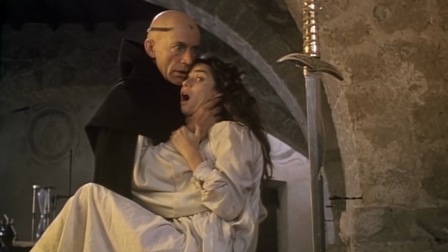
The Pit and the Pendulum:  “How can they confess if they don’t have tongues?!”  One of the first Full Moon movies, and along with Aliens, the beginning of my Lance Henriksen fandom, this is a pretty good low budget take on the classic story.  It’s all about the Spanish Inquisition, and the insanity of religious bureaucracy gone too far, and power put into the hands of a zealot.  It’s pretty darned over the top, but a lot of perverse fun.

Hellraiser:  “We have such sights to show you.”  If the stars shifted, the Old Ones returned, and I found myself in charge of a major film studio, there are a few remakes I’d like to do.  One would be, like Peter Jackson before me, to do my own version of King Kong.  Since he beat me to it, I may just have to pass on it now.  Second would be to do my own version of The Creature from the Black Lagoon.  Oh, man, would I do an upsetting version of that film.  Eat your heart out remake of Cat People!  But third on my list would be either the Phantasm series or this, Hellraiser.  Clive Barker’s adaptation of his own novel, The Hellbound Heart, is interesting but not actually all that good.  It hints at more, at better things.  The sequel picks up on some of those, but still misses the boat.  I would love to get my hands on it.  The idea that the Cenobites are more than just demons or angels, that they are some kind of extradimensional beings, explorers in the realms of sensation and experience, is full of potential.  And the box is a powerfully iconic artifact that could be explored in lots of different ways (I actually do like a bunch of what was done in Hellraiser: Bloodline).  Kirsty Cotton (ignoring where the series takes her) is not an especially interesting protagonist, nor are her uncle and stepmother especially powerful villains.  Her dad seems like a nice guy, and her boyfriend is a snore.  The movie is really best looked at as a treasure trove of ideas.  Sadly, most of those ideas don’t bloom here.


Heat:  “That lady who wears dark glasses at night asked me to give you this.”  Burt Reynolds, man.  Burt Reynolds.  It’s weird to see him picking on someone because of a bad hairpiece.  It’s a strange film.  He’s a hired goon who needs money to move to Italy.  His hooker friend gets all stove up and wants revenge.  That nerdy guy from Ghostbusters II is nerding it up.  The plot wanders around a bit, with people coming in and out.  It feels a bit ‘slice of life’ in the way the story progresses.  Honestly, Reynolds is pretty good in this.  It’s not a great movie, but it’s watchable.  And Reynolds does harpoon a dude with some rebar.


Man of Steel:  OK, so friend Ben didn’t get to see this the first time ‘round, so I accompanied him to what was my second viewing.  My first and biggest complaint is still the shoddy hand-held camerawork.  It’s atrocious, and makes me feel seriously ill on more than one occasion.  My other complaints remain, as do my positive assessments.  The second viewing does make me realize that I actually really like the movie up until one specific point, marked by the death of someone close to Clark and the re-introduction of Zod and cronies.  From that point on, the movie goes from a solid B (marks off for shaky cam) to a C.  The wanton and callous destruction does seem a bit much.  In another movie, like a disaster, war, or alien invasion film, it might have felt a bit more on target, but the fact that Superman doesn’t seem to take much note of what must be millions of people being blown up, squished, gravity gunned, burned, and otherwise ended, seems a bit odd.  That he takes the time to make out with his girlfriend in a wide open field that seems to be made of the ash of millions of dead people also seems…ill advised.  This could have been better with a few tweaks to the plot, a few re-workings of the dialog, and a frickin’ tripod for the camera.  It’s OK, but it could have been good.  This second viewing is probably enough for me.  While almost certainly the best Superman movie, it’s still not that great, and I still don’t give two shakes about the character.  If there’s a sequel (ha, ha…if), I’m sure I’ll be there to see it.  But it won’t be making my most anticipated list…Unless things get really dark in the land of movies.


    I read the science fiction short story The Little Black Bag by C.M. Kornbluth.  It’s an odd one, and has a great nasty ending.  It would probably make a really good short film.  And on Friday morning, I finished the fourth and final volume of B.P.R.D.’s Plague of Frogs epic.  Man, that series is waist deep in the apocalypse and still charging forward.  Can’t wait to see what the rosy sounding ‘Hell on Earth’ storyline will bring.


    And finally, on Saturday, I rejoined the modern world with the internet.  I imediately plunged into an orgy of time wasting, blankly looking at all the various sites I haven’t had time to regularly check up on, poring over old blogs, and watching episodes of Q.I. into the deep hours of the evening.  I’m back.


-Matt

Wednesday, April 10, 2013

Movie Review: The Cage/Where No Man Has Gone Before


    This time around I’m going to do something a little different.  Instead of the feature films I normally review, I’m going into some detail on the two pilots for the original Star Trek TV series.  I think it’ll serve as a good transition between Forbidden Planet and my next selection.


    The original pilot for Star Trek was noticeably different from the show that was to come.  In fact, the only character you might recognize is Mr. Spock, though even he isn’t the emotionally dead alien we all know and love.  It takes many cues from previous science fiction, mostly books.  But you can’t help but notice similarities, especially in design, to the groundbreaking Forbidden Planet.  It didn’t exactly go over well with the powers that were, but apparently it had something, because they commissioned a second pilot and eventually the show that would become so popular.  The Cage fell into obscurity, only a few parts seen in flashbacks during a two part episode of the regular show.  It didn’t see broadcast until sometime in the 80s.  Like the original pilot of Lost in Space, there are a lot of ‘what might have been’ moments in The Cage.  The most striking things, of course, is Jeffery Hunter as Captain Christopher Pike.  Though I don’t know that network television of the time could have dealt with sustaining a character like Pike in any meaningful way.  But I like this captain who is at the end of his rope, ready to quit.  He’s seen too much, done too much, lost too many people.  Kirk, for all his cool, was really a typical action TV hero of the time.  I like Pike’s bitterness.


    The storyline again echoes Forbidden Planet at the beginning, with the crew investigating a lost ship.  There’s even stuff about a long lost super advanced civilization (their hallways are even the same shape as the Krell).  But things take a different road once those aliens, iconic 50s/60s style giant headed aliens in sparkling robes.  With Pike captured and the crew left to figure things out, we go into an exploration of what it means to be a Human, to be a free and independent being.  There’s a lot of stuff about illusion and memory, and what those things mean to us.  Apparently the executives who saw this originally thought that it was ‘too cerebral.’  Too cerebral?  I guess in the world of I Love Lucy and The Honeymooners, maybe it was.  For science fiction, like film and TV has pretty much always been, it was 20 to 30 years behind the literary times.  It had a woman serving as First Officer (execs couldn’t live with that), something that wouldn’t have been too shocking for any sci-fi reader of the day.  It had an alien working on the ship, another thing that wouldn’t have been too strange for readers, but didn’t sit too well with the suits.  I’d have preferred they keep the lady and the alien, but they had to pick their battles.  The resolution of the story is a bit too quick, too easy.  A bit of a deus ex machina with the sudden translation of the ship’s computer followed by a ‘woops, our bad’ on the part of the aliens.  Yet it still manages to pull out a bittersweet element with the blonde and her fate.


    With the second commissioned Star Trek pilot, Where No Man Has Gone Before, we meet the new, more dashing captain of the enterprise, James (here R.) Kirk.  Also, the first appearances of Scotty and Sulu.  And Spock is more like what he would become, uncomfortable with Kirk’s ‘Earth emotions.’  We see much more of the ship’s interior in the episode, and a taste of the interesting lighting and color pallet that would be a hallmark of the show.  The story features another lost ship, this one swept beyond a weird energy barrier at the edge of the galaxy.  There’s some stuff about people with ESP (popular at that time) who are effected by the strange energy.  After the Enterprise goes through the barrier, it too is effected, or at least, some of its crew are.  Many die, but one, Kirk’s old school chum Garry Mitchell, gets a major league brain boost.  How does one deal with a man who may be becoming a god?  How does a man deal with that transformation in himself?


    Though I really love this episode, it does feature a movie/TV science fiction cliché that drives me a bit nuts.  In movies and TV, any superior machine or person is automatically amoral (rare) or evil (frequent).  Though the literature features robots and super-beings with good intentions, film and TV seems totally void of even the potential of benevolence among superiors.  I don’t see why superior intellect would not also feature superior morality.  We’re smarter than our ancestors and a hell of a lot more moral, why would our descendants (genetically and cybernetically advanced though they may be) be different?  Now, in the case of Garry Mitchell, one could easily see that he had some deep flaws in his emotional make-up right from the start.  The kind of thing that might never have turned ugly; but when power is thrust into his hands, allows him to be corrupted faster and more completely than normal.  Dr. Dehner, for example, seems like she might have retained her moral center if given the chance.  Mitchell seems like the kind of guy who walks through life without much hassle, not having to work for the things he gets, and resentful of the things that challenge him.  That’s a man made to abuse power.


    Something about the script and pacing of this makes it feel more ‘cinematic’ to me than Trek ever felt until The Motion Picture.  In fact, I thought a modified version of this could have made an interesting feature film.  I’d like to see some of the issues dealt with in a deeper way, especially the reasons for Mitchell’s fall into power-fueled madness.  I guess they addressed the complaint that The Cage was ‘too cerebral’ by having a big fistfight ending.  That kind of set the stage for a recurring theme in the rest of the series.  I had an odd realization while watching this, actor Gary Lockwood is playing a human being uplifted to a super-being that turns evil.  A few years later, he would play the doomed partner of a man who is uplifted to a super-being with the potential for good in 2001;  2001, which features a supercomputer that goes murderously rogue, while also featuring an uplifted human with the potential to save mankind.  Kind of a mixed message, there.


    I don’t think Star Trek has ever quite lived up to the potential represented by these first two pilots, at least not more than a few times.  It’s a great show and has some really good episodes.  But few capture the sweep or emotion of these first two stories.  City on the Edge of Forever (often cited as one of the best, though not my favorite) is probably the closest.  Watching them makes me wish things could have been different, better writing, more structured stories, more planning.  I know TV of that day didn’t work like that, slavishly devoted to the episodic, wrapped up in an hour, watchable in any order way of things.  But science fiction is often about ‘what if?’  So what if these two stories, The Cage and Where No Man Has Gone Before, had been more of an indication of the show to come?  Not the show of silly crap like Charlie X or Catspaw, but a more serious science fiction adventure show.  More Heinlein, Clarke, Asimov, etc.  Less Shadow of the Gun, Omega Glory, and Spock’s Brain.  What if?


-Matt

Monday, September 5, 2011

Matt’s Week in Dork! (8/28/11-9/3/11)


    As far as weeks in Dork go, this one was kind of meh.  Work was rough, and my legs were still pretty messed up from my bike crash (finally starting to really get better, I think).  I got a little reading in.  Mostly comics.  But I haven’t written any reviews, because…well, because I kept finding other things to do instead of what I should be doing.  So, first up, the stuff I watched.


Fright Night:  One of the better remakes I’ve seen in a while, it was a solid updating of the classic 80s horror film.  Plenty of nods to the original, but with lots of fun new twists.  The cast was excellent, even the usually annoying Colin Farrell was good.  As always, I could have dealt with less CG blood.  How hard is it to make the real stuff?  Definitely worth a watch.  It’s a nice looking film with a solid script and good performances.  Not amazing.  But good.


First Man Into Space:  “The conquest of new worlds always makes demands of human life. And there will always be men who will accept the risk.”  It seems like this tale has been told just too many times.  Every other science fiction/horror film in the 50s seems to have involved a guy going up in a rocket, getting manipulated by something, then returning to earth as a slavering monster.  This one has a good cast and is well shot.  But  it’s just more of the same.  I think The Quatermass Xperiment has a bit more flare.  But this one is better than several others I’ve seen.

Hi Mom!

Being There:  A strange, quiet film.  Peter Sellers plays a simple, good man, with not understanding of duplicity or cynicism.  As he wanders through the world, he spreads a strange kind of peaceful message that people misunderstand but are attracted to.  Very odd.  But interesting.  And what an ending.


Rise of the Planet of the Apes:  Far better than I was expecting, and far less steeped in anti-science, this movie isn’t amazing, but it’s certainly worth a watch.  The effects are uneven, some being fantastic, others kind of wonky.  And the story is largely a retelling of Conquest of the Planet of the Apes.  But it’s moderately well done.  It did remind me how different movie ratings are today.  This film is clearly held back from being as brutal as it seems to demand, and gets a PG-13, where Conquest of the Planet of the Apes really is brutal and had a PG rating.  Times have changed.


Doctor Who: Underworld:  A fair story arc, based largely on the legend of Jason and the Argonauts, it’s heavy on effects, though not always effective.  Budget issues kept it from looking as good as it might have, considering how grand the vision was.  A good guest cast in this story.


The Perfect Host:  David Hyde Pierce is charming and fun, but sadly this is one dinner party you may want to skip.  The film just never quite works.  The performances are fine, I guess, and the idea not too bad.  But it never really comes together.  Still, if you like his work, Pierce is probably worth the price of admission.  I just wish it had more to recommend it.


Erik The Conqueror:  An Italian Viking epic?  Why not?  Some pretty impressive sets and location shooting pepper this so-so tale of Norsemen brothers, raised separately who are thrust back together through various machinations.  It’s OK, but nothing to write home about.  I kept wanting it to be a bit more brutal, a bit more action packed, a bit more sexy, …something.


Corridors of Blood:  Boris Karloff is once again trying really, really hard to do right by mankind.  But, like nearly every scientist in a 50s movie, his efforts go awry.  Overall, a solid film, but not really especially good.  Karloff has a lot of heart, though, and it’s nice to see him work.


Batman: The Brave and the Bold: Season One-Part One:  Boy oh boy this show is wacky.  More crazy, obscure DC characters get pulled out of the dusty cartoon closet to team up with or stand against the Dark Knight.  Interestingly, a multi-part story is being hatched in the opening tags that I can’t wait to see the end of, featuring Starro the giant starfish from space.  It even had an all to brief appearance of The Challengers of the Unknown.


Shark Night 3D:  Do you love gory horror movies with lots of gratuitous nudity?  I know I do.  Sadly, this isn’t one of those films.  A bland cast of people who look like other people you’ve seen in movies that are pretty much the same as this one.  And, man, the weird, awkward, unintentional (?!) racism that swims around Sinqua Walls’ character…Yikes.  Sadly, the best part of the film is the post credits tag, which had me laughing.  Probably the first intentional emotional response I had to the film.

Yeah.  That happened.

    I also watched a few episodes of Roald Dahl’s Tales of the Unexpected, which was fun in a sort of Ray Bradbury Theater sort of way.  Not quite The Twilight Zone, but a little more consistent than Night Gallery.  And I caught a couple episodes of Space Angel, which seems fun.  But I do hate that mouth thing they do.  I’d rather they just embrace their primitive animation style than thrust in weird looking live action mouths.


    I watched this Nietzsche lecture that I found somewhat interesting, as well.  Nietzsche has been coming up a lot lately, and it’s making me want to start reading him again.  We’ll see.


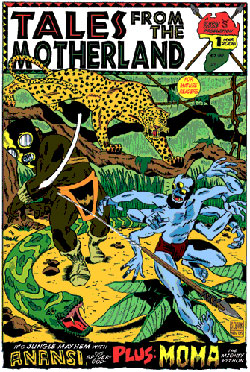
    I read some graphic novels, like Afrodisiac and Tales from the Motherland.  And I really do need to get on the ball and do some write-ups.  But they are getting me pretty excited about going to SPX next weekend.


-Matt

Sunday, June 5, 2011

Matt’s Week in Dork! (5/29/11-6/4/11)


    Not an especially exciting week in Dorkness, but I did have a little fun.  Up first, the movies.

Pandorum:  Certainly not a perfect science fiction film, it does capitalize on some of my favorite tropes.  A guy wakes up on a spaceship that has seen better days and needs to find out who he is, what’s been happening, how long he’s been asleep, where the ship is, and what the heck those horrible things running around in the halls are.  With the help of a superior officer, a savage scientist and a crazy warrior farmer (and a few other friends he meets along the way), he may just be able to save everyone.  Creepy sets, nasty monsters, and some cool ideas make this one worth a watch.  There is a twist near the end I found annoying.  And at one point, I thought it was going to have a twist that would ruin the film in my mind (but thankfully, it didn’t happen).  But overall, it’s a good watch.


Doctor Who: Planet of the Daleks: In spite of being roughly the same length as the previous story, Frontier in Space, this story moves with a better pace and feels less repetitive.  The Doctor’s perhaps too frequent enemy, the Daleks show up with a crazy plan to make their army invisible.  But the slightly more energetic descendants of the Thals (who we first saw when William Hartnell first encountered the Daleks in his second story) may be able to help thwart the evil menace.  The story is solid, some of the action is very fun (especially escaping the inescapable room), and you can sort of tell they’re prepping viewers for the exit of Jo Grant, which will happen in the next story, The Green Death.

Don't do it!

Strings:  An interesting fantasy tale presented in the creepiest of fashions, Strings is mostly effective, especially when it comes to making the viewer feel for wooden puppets with basically motionless faces.  I can’t say the film was great, but it was certainly an achievement and would probably be enjoyed by younger viewers, though there is plenty of freaky stuff that might bother the more sensitive.


Ride Lonesome:  A cool revenge story slow burns its way through this western.  Unfortunately, I found Randolph Scott (who I know is well liked by genre fans) completely lacking in anything one might mistake for charisma.  The rest of the cast is fine, and the finale is fantastic.  I’m not giving up on Scott, but as far as first impressions go, this wasn’t so great.  And yeah, I totally watched this because of it being referenced in an episode of The Middleman.  Sue me.


X-Men: First Class:  Alternately awesome and kinda lame, First Class tells the story of the origin of the X-Men.  Professor X, Magneto, and Sebastian Shaw are all very interesting and could have easily carried the whole film.  Sadly, all the other mutants are kind of dull/annoying, especially Emma Frost (played by the infuriatingly one-note January Jones) and Mystique (played by Jennifer Lawrence who will never grow up to be Rebecca Romijn).  Shaw’s rocking, swinging submarine is awesome.  The CIA’s Camp Mutant is kind of silly.  All the awkward teen scenes are terrible.  There are great sequences and moments of real power, but the whole thing feels a bit jumbled, like scenes follow other scenes only by chance and not as a cause and effect chain.  Still, the movie is cool, and I’m sure fans of the comics will find plenty to love.


Gigantor:  I found this show extremely dull.  I made it four or five episodes in before I had to quit, before I realized I was paying more attention to the dust motes in the room than I was to the TV.  The stories were just not interesting, and the voice work (English language) was terrible.  Ah, well.

I can make you SLEEEEEEP!

A League of Their Own:  A pretty good tale of life on the home front during the Second World War, it would probably make a really good family film if not for the pretty pervasive strong language which seemed a bit out of place more often than not.  A good bunch of characters all thrown together for a whirlwind tour of baseball and sexism.  There are several good moments and performances.  However, I can’t help but think it could have been better with a little tweeking here and there.  Frankly, the last 20 or so minutes lacked that drama it needed for a good finale.


Push:  While obviously setting up for sequels that will not likely be coming, Push is still a relatively entertaining superhero movie.  The cast is solid, except for doped up Cupie Doll, Camilla Belle who on rare occasion actually seems to notice she’s in a film, though I don’t think she ever actually participates in anything on purpose.  There isn’t really much new here.  It’s kind of an X-Men movie, but set in Hong Kong.  A bit of a Mission Impossible style climax helps move things along.  Not great, but not bad.  Heck of a lot better than the previous year’s extremely awful Jumper.  I wish they’d pushed some more boundaries, though.  Maybe a bit more violent, or higher stakes, or something.


    I also watched a few more episodes of Stingray and The Middleman, which continue to be a lot of fun.


    On the book front, I finally finished reading The Last Apocalypse by James Reston, Jr.  Though the time period is fascinating, I found the book sadly lacking.  After the first 50 or so pages, I just stopped caring about the Vikings.  Unfortunately, he doesn’t stop talking about them until page 111.  Then it’s a cursory overview of Spain, which felt like something you’d get in a high school text.  He spends only about 50 pages there, and gives it little import.  Then the last 110 or so pages are a blow-by-blow word salad of Central and Eastern European cultural clashes between emperors and popes.  Had the book been organized slightly more chronologically, perhaps with into “50 Years Before,” “The Millennium,” and “The Aftermath,” then focusing on a few major areas within each section, like Scandinavia, Spain, Constantinople, and Rome it might have worked better.  Instead, I found the timeline difficult to follow.  I thought about it later and realized that events I was reading about were taking place at the same time as events I had read about 150 pages earlier, but they seemed like they were separated by centuries because of how much unrelated stuff I’d been reading about.  This isn’t as haphazard in its organization as Maria Rosa Menocal’s Ornament of the World, but it’s also not as informative or engaging.


    I also finished volume 2 of Conan.  And got a chance to start Reality is Broken, though I haven’t made it very far in, yet.


    And I took my first solo trek into DC, where I was blocked from my destination for some time by Rolling Thunder, the annual motorcycle parade that cuts through the city and makes getting places a bigger pain than usual.  And I ran afoul of the pickiest metal detector I’ve ever seen when I went for lunch with my visiting brother and friends.  However, it was worth it for discovering yet another strange little hole in the wall in DC, the moderately creepy food court in the Old Post Office.  Such a strange vibe.  Part cafeteria, part mall food court, part bazaar.  I half expected to see slaughtered pigs hanging from racks, rugs for sale, and someone offering black lotus (Stygian.  The best!).


     And Finally, I saw this nice little video featuring a bunch of great quotes from my favorite philosopher.  I always find him to be a nice palate cleanser.  You can pick up some Nietzsche anytime, read a little bit, feel refreshed, and go on with your day. 


-Matt