Showing posts with label Space. Show all posts

Tuesday, July 19, 2016

Book Review: The Broken Cycle


    After his many misadventures in “The Hard Way Up,” John Grimes is given a mission nobody wants with a ship captained by a guy who really doesn’t want John around. But things go off the rails pretty quick, with John and a tough lady cop stuck together in a dilly of a pickle.

A. Bertram Chandler published “The Broken Cycle” eight years later than the stories in “The Hard Way Up,” and it’s clear tastes had changed a bit, or the author had become a bit more untethered. There is some strong language and some semi-graphic sex. Where earlier Grimes stories would have been solidly PG, this book roves into more R-rated territory. And the sexism is still there, even if it’s been tempered a bit by modernity.

    The story is fast paced and mostly unexpected. There was a point where I could tell there wasn’t much left of the book, and I had NO idea how things could possibly wrap up. Often, I had no idea where Chandler was taking me. One of the strengths of these Grimes stories is they read fast. That helps to gloss over some of the shortcomings. In the case of this book, there really isn’t much story or seemingly much point. It’s just some stuff that happens. It’s kind of like a filler episode from a TV series. I don’t feel like anything of note was advanced, but it’s still perfectly enjoyable to read it while waiting for a better story (hopefully) in the next book. Had the book been longer or less readable, with no more content, it might have become a grueling slog.

    I’m taking a break from John Grimes now that I’ve finished the first omnibus in which I found this. Baen published “To the Galactic Rim” a few years ago as the first part in their complete reprinting of Chandler’s Grimes stores. Fans of classic science fiction should go get these. While I didn’t love this particular book (I enjoyed it just fine), the omnibus in general is great stuff.

-Matthew J. Constantine

Tuesday, June 28, 2016

Tabletop Roleplaying Review: Eldritch Skies


    The first thing you’ve got to know is that chances are, you’ll be reading a newer edition of this book, and it’s meant to be for the “Savage Worlds” rule system. The blurb on the back says it’s for “Cinematic Unisystem,” and that all the rules are contained within, but I’m assuming this is an oversight from when the new edition was printed. You will need “Savage Worlds” if you wish to use the book as is. That said, I don’t think it would take much effort at all to convert this over to any number of game systems, and dropping out any mechanics, it would work just fine as an alternate universe sourcebook for “Call of Cthulhu.”

    That bit of bookkeeping out of the way, let me get on with it.  “Eldritch Skies” is a slightly pulpy Science Fiction game that uses H. P. Lovecraft’s writings as a basis.  It strips away a good deal of who and what came after Lovecraft, trying to stay only with what the man himself wrote (which still includes the creations of some others, like The King in Yellow and the Serpent People).  Lovecraft often read like Gothic horror, but the content was often more in line with Science Fiction, so this works surprisingly well.  The cosmic horror is still present, but it is not as gloomy.  Humanity’s place in the universe is tenuous and unassured, but it isn’t destined for some immediate, ugly end.  This might be a bit odd for many, more used to “Call of Cthulhu’s” darker, constant existential danger.  An “Eldritch Skies” series need not end with everyone dead or insane.  It could very well end up with folks in some pretty good places.  But the universe will still be a dangerous place, filled with extremely alien threats, and like all life forms, Humanity’s time will pass.

    In “Eldritch Skies,” the events of various Lovecraft stories, particularly ‘The Shadow Over Innsmouth,’ ‘At the Mountains of Madness,’ and ‘The Shadow Out of Time,’ and some others have happened. The governments of the world became aware of aliens and the forces of the so called Mythos. They became aware of Deep Ones, the Great Race, the Elder Things, and more.  And they began to explore the weird technologies, and weirder ‘magics.’  It didn’t take long for history to take a new path, culminating in the achievement of interstellar flight in 1996. The default time for this game is 2030.  Humanity has been in space for some time.  We’ve discovered some worlds, set up some colonies, made some enemies, and learned some new lessons.  We share the dark with the malevolent and the apathetic.  We scrounge resources and hunt down ancient artifacts to learn new sciences.  It’s a big, dark, weird universe, and it doesn’t care.  There is no light at the end of the tunnel; nobody waiting to rescue us or show us the way.  Some of the life out there doesn’t even seem to know we exist, and that might be the best possible situation.

    I love this setting.  Lovecraft’s more Science Fiction side has often been my preferred, and those few authors who lean in that direction tend to make me happier.  I like space based Science Fiction where the aliens are really alien.  And I enjoy that while this game is dark, and there are dreadful dangers, it is not without joy or hope or excitement.  It is much more how I actually see the universe, empty of the divine, but open for those willing to reach.  And that’s a great place for roleplaying.  It’s the stuff of drama and character.

    Since first hearing about this book a few years back, my imagination has run wild.  It’s a setting I very much want to visit.  I’d love to play, but I’m much more likely to run something in it. There is so much potential, so much to explore.  And that it’s rooted in one of my favorite author’s work, but taking it in such a different direction than is normally done...That’s exciting.

-Matthew J. Constantine

Friday, February 5, 2016

Book Review: Star Hunter


    Fans of science fiction simply must read Andre Norton (Alice Mary Norton). She was one of the architects of the genre, writing a daunting number of books that stand alone Asimov, Herbert, and the rest. She creates visions of believable futures, peopled with multi-faceted characters. And she does it in just a hundred or two pages.

    In Star Hunter, we’re introduced to Ras Hume, a safari guide and big game hunter who takes wealthy folk to specially selected game worlds. But he’s also running a con, getting the mob and a desperate orphan wrapped up with him. And when they stumble upon something unexpected, all kinds of trouble drops on their head.

    When I’m reading Norton’s work from the 50s and 60s, I can’t help but think she was crafting a larger universe without every getting too strict about it. I often get the feeling that if you flew far enough in one direction or another, you’d find the characters from one of her other novels going through their particular set of struggles. If I were a better man, I’d assemble some kind of guide to her worlds; try to figure out which stories belong together.


Star Hunter
Author: Andre Norton
Publisher: Bean
ISBN: (book two in the collection Secret of the Stars) 978-1-4767-3674-7

-Matthew J. Constantine

Sunday, September 21, 2014

Book Review: Secret of the Lost Race


    Andre Norton (aka Alice Mary Norton) is among the great Golden Age Science Fiction writers (I consider the 50s as part of the Golden Age, though some say it ended in the late 40s).  Though her later career moved into a sort of Cat Fancy/Fantasy thread, her early work was core, essential stuff.  This tale is of a young seeming man with a shrouded past, working in a gambling hall.  When things go wrong, he ends up shanghaied and forced into labor on an ice planet.  From there, conflict, adventure, political intrigue, and galactic revelations.


    Going back and reading books from this era (used to be my bread and butter, but I don’t read nearly as much anymore), I’m always a bit taken aback by how modern they feel.  In large part, I think this is because movies, which I watch more frequently, are always so far behind books.  Settings and styles of books written in the 40s and 50s would not see depiction in film until the 80s, or even 2010s.


    I enjoyed the heck out of the book, but it feels like part of a larger whole.  Often, while reading books of this time, the worlds feel so fleshed out that when the book is done, I wish to read more stories.  Yet, most of the time there are no more.  It’s a testament to the skills of the writers, but it’s frustrating, none the less.   For fans of science fiction, Andre Norton is a must and this would be a good introduction.


Secret of the Lost Race
Author: Andre Norton
Publisher: Bean
ISBN: (I read this as part of a double volume called Secret of the Stars) 978-1-4767-3674-7


-Matthew J. Constantine

Monday, November 18, 2013

Book Review: I Wonder


    As I don’t have kids, and probably never will, I don’t focus a great deal of my time on kids books (Philip Reeve’s work being the usual exception).  However, I thought this one warranted some attention, because it’s such an uncommon thing.  Annaka Harris has written a book about the joy of realizing you don’t know something.  No, it’s not a book that celebrates ignorance.  It celebrates recognizing the ends of your knowledge and the beginnings of your quest to learn.  It’s a book that lets a child (and adult) know that it’s OK to say, “I don’t know;” to wonder.  Wonder is how it all begins.


    The art by John Rowe is gorgeous, and intensely colorful.  It’s somehow impressionist, but with a photographic quality, and is really something to look at.  It features the kind of images I’d have been absolutely lost in as a child.  This is the sort of visually striking thing I always craved, and rarely found.  The stuff that propelled me in to wanting to read more, to learn more, and to create more.  Pictures like these were inspirational when it came to early attempts at writing and at art.


    For parents who want to encourage their children to learn, to quest for knowledge, to admit they don’t know the right answer (and to try to find out what is the right answer), this is a great pick.  And honestly, how many kids books have a recommendation from a physics & astronomy professor on the back?


I Wonder
Author: Annaka Harris
Art: John Rowe
Publisher: Four Elephants Press
ISBN: 978-1-940051-04-8

-Matt

Sunday, June 30, 2013

Movie Review: Alien


    My first awareness of the Alien films came when I picked up a special Starlog magazine devoted to the then new film, Aliens.  I loved the creatures and the tech, and I would flip through the magazine time and again, without seeing the film, imagining what it all meant, building stories around the pictures.  Some years later, when we finally got a nice color TV and a VCR, I started to rent movies on occasion, and two of those early rentals (also among the first R rated films I saw) were Alien and Aliens, back to back.  That’s all it took.  I was hooked.  I loved both films.  I think for a long time, because it was faster paced and more actiony, I would have said that Aliens was my favorite between the two.  Eventually, I began to say that I loved them both, but for different reasons.  Alien was a great horror film, and Aliens was a great action movie.  I still think that’s the case.  But, I realized a couple years ago that in fact, I really, really like Aliens and I really, really LOVE Alien.  Not just a great horror film, Alien is a great film.


    In the aftermath of Star Wars, science fiction became more appealing for the folks with the money.  And, suddenly the idea of  a more ‘lived in’ future (as opposed to the ultra-clean Star Trek/2001 type futures) was acceptable.  People in space might not just be variations on our idealized astronaut heroes, but workaday schlubs just trying to get paid and get by…in space.


    After the opening titles set the creepy tone, our view slides through the halls of the ship, we see an environment where people might live or work, not too different from your office, your break room, your kitchen.  Some cryo-beds open to reveal a handful of everyday folks, a tugboat captain, his crew, and a couple surly mechanics.  Not only might I work along side any one of these people, I could very easily be one of them.  I hear echoes of myself in Yaphet Koto’s words, in Veronica Cartright, in Tom Skerrit.  And I like to think some of the best of me can be seen in John Hurt.  The point is, the film takes its time to introduce us to very relatable characters, and puts them in a very relatable environment, even if it is in space.  By this tactic, the tensions, the shocks, and the tragedy all become as relatable, thus far more effective than so many horror movies with disposable victims and vacuous ‘heroes.’


    It’s a slow burn.  About 45 minutes pass before the alien makes its first appearance.  But the tension builds and builds so effectively.  Sometimes there are jolts and jumps, mostly to give you a bit of relief.  Yet, after a brief release, it begins building once again.  Even when the trouble really gets going, there are long stretches of silence and fear.  The atmosphere is like a character unto itself, seeping into every scene, an invisible elephant in the room.  The stark terror and loneliness expressed beautifully by the cast becomes palpable.  Alien is a genuine and emotional masterpiece.


    Sexuality is both absent and ever present.  The alien itself is birth, death, and rebirth.  The tension of death and sex, penetration and embrace is lurking between the lines.  The creature is beautiful and terrifying as it is mysterious.  Is it simply an animal looking to feed and breed?  Is it intelligent?  Is it a weapon?  Is it part of some greater plan?  These are questions the movie leaves unanswered, letting you imagine a great deal.  There is a larger universe created in the film, with things far beyond our perceptions.  But sex and death transcend our ideas of civilization.  Perhaps the alien is the very embodiment of nature, giving life and taking it without regard.  Does it feel or think?  Does it look upon the humans as victims or just a warm spot to put its young?  And what evolution brought about such a thing; what is its home like?


    Alien plays with your expectations.  Who lives, who dies, when and how.  It’s all against the prevailing fashion.  As is the slow pacing and incredibly long build-up.  And I think this factor lends to its popularity and timelessness.  Alien is a movie that hasn’t aged, except maybe that the computers look primitive next to today’s ultra-mini touch screens.  Everything from the sets and costumes to the cast and script ring true.  They seem authentic.  And the alien is still one of the most beautiful things ever created for film.  It is a work of art, made more impressive by how possible it seems.


-Matt


Thursday, May 9, 2013

"What Do I Do?!?!?" - George Clooney & Sandra Bullock Face The Open Water Of Space in Gravity


Not quite sure what to think about this one.  It's been in development for what seems like eons, and now that we've finally gotten a look I'm a little underwhelmed.  But it's only a teaser.  I'm a big fan of Cuaron's Children of Men (especially from the craft standpoint), his Y Tu Mama Tambien spiced up my college days, and his Harry Potter is the only flick in the franchise really worth it's salt.  And I love me some George Clooney.  My heart goes pitter patter whenever he crosses my screen, especially when genre gets involved.  But Sandra Bullock?  Outside of Demolition Man & Speed, I don't have much use for her.  I'm curious to see what Cuaron & his two leads can do with the ocean of space - I get an Open Water vibe, that's a flick that certainly offered some intensity but it's also a movie that didn't settle with my cinema core.  I'm certainly gonna check it out, but I'm not yet excited.

Thursday, April 4, 2013

Matt’s Soapbox- The City of the Future


    When Brad and I started this blog, I had always intended to feature more science items in my posts.  Brad is dorky about comics (so am I, but not as much), action figures, music (which he should discuss more), Westerns, and fan art.  While I’m more dorky about science fiction, history, scientific and technologic advancement.  I’ve posted a few book reviews (which admittedly have strayed into soapbox preaching), but I haven’t done much in the way posting about science.  This is an attempt to amend that in a small, if long winded, way.


    Cities may not be the ultimate expression of humanity, but they’ve got to be in the top 5.  Civilization may have had its origins in hunting groups, jewelry making, domestication of animals, and the first attempts to cultivate crops, but it didn’t get moving until the first cities were built.  Why?  I’m sure there are a million reasons, but I think the most obvious is the old proverb that ‘two heads are better than one.’  One amazing, creative genius living in seclusion is likely to make little difference in the grand scheme of things.  A hundred, a thousand, ten thousand living in close proximity, sharing ideas in a feedback loop of creativity can, have, and will change the very course of Human history, the Earth, and the stars.  The city is like a canvas upon which history is painted.


    To give a bit of background, I was born in a small city (perhaps a large town) called Bangor in the New England state Maine.  I grew up in the late 70s through the 80s, where the hope and excitement of the 50s and 60s was on its last, staggering legs.  My neighborhood had a few distinct features that set the tone of my childhood.  Most of the people were older; the broken, grown-over bones of long-gone industry were literally a few feet from the edge of my back yard, a drug infested slum was just around the corner (in both directions), and there was a shabby, rundown playground from a generation before that had become the haunt of homeless, junkies, and the closest thing Bangor could manage to gangs.  Maine had been (and with the exception of a few hope building then dashing bumps, has continued to be) on a downward spiral of entropic decline since the early part of the (20th) century.  Each year, something died its last death, something closed, some industry moved on or was made irrelevant.  Once upon a time, it had been a bustling state with several strong industries and somewhat diverse population.  Bricks, lumber, ice, potatoes, granite, paper.  Maine had it.  But who builds with brick?  Why would you buy lumber that costs so much more than the stuff from Canada?  And who even uses that much lumber anymore?  Who needs ice in an age of electricity?  Who uses paper in a world of computers?  It all went away, and though there were always a few scattered voices of reason, begging people to adapt and change with the times, those voices were candles in a hurricane, lost in the vast onslaught of status quo loving, ‘not in my back yard’ singing voices.  All that was left were the tourists, who we hated for their alienness and rude intrusion while we swindled them like Tombstone whores for every cent we could pinch (seriously though, Canadian tourists were assholes; you’ve got to give me that).  Bangor was not the idyllic postcard image of a New England town.  It’s former glory was long tarnished, old mansions turned into slum apartments, roads broken, parks in disrepair, sidewalks grown over, train yards silent, bridges rusted.  It was strip malls, and parking lots, and empty storefronts.  Kids with nothing to do spent their time causing trouble, using drugs, and having babies.  But I would hear all the time, ‘it’s so much worse out there; big cities are full of danger; we know how to live.’  And for a long time, I believed it.  My few visits to Boston did nothing to change my feelings.  Boston is everything I dreaded about The Big City.  It’s crowded, stifling, and dirty.  So dirty.  “If this is the city, if the city is what I see in movies, if it’s the stories I hear from old people, then I don’t want any part of it.”  It’s no wonder I was so into science fiction as a kid.  When you come from a poor family, from a town full of broken dreams, and everything beyond is shrouded in paranoid fear, you want to look to a hope filled future.  In my late 20s, I realized something had to change.  I was hearing all these stories from friends who had left and gone to greener pastures.  My job (or jobs; at one point I had four but still couldn’t pull in enough money to eat) was going nowhere and showing no signs of ever going anywhere (actually, other than a theater and Toys R Us, everywhere I ever worked is now closed).  Not being into drinking and drugging, my social life was limited to a handful of gamer friends.  And when it came to women, I was getting tired of trailer-trash gals who were looking to get knocked-up so they could get another welfare check, who spent their free time listening to country music and complaining about how Mexicans were stealing their jobs (there are like three Mexicans in the entire state of Maine and no jobs, so I’m not sure what kind of job thievery was going on), while asking me questions like ‘wha’tchu readin’ for?’  (And yes, that is a bit of an exaggeration.  That description fits only 90% of the women I met.  Working in a book store and a game store, I did meet women who could read on occasion.).


    I came to the Washington DC region because I had the opportunity.  It wasn’t my plan.  I was thinking, “I’ve got to get out of here and I’ve got to get out of here, now!” not “I need to go to DC?”  One of my brothers had moved to the area years earlier and was able to help me get a foothold.  Otherwise, I was thinking about Arizona, a Pacific island (seriously), or some other small, out of the way, reclusive place.  I didn’t want to move to a city.  I’d seen cities on the big screen, on television, in stories.  I’d been to Boston.  Heck, hadn’t DC been ‘murder capital’ of the US a few years back?  But when I got here, something else changed in me.  No longer did I simply need to get out of Maine, but I fairly quickly saw that there were aspects of living in a city I’d never imagined.  Being me, one of the first things I noticed was the women.  Everywhere around me was a rainbow of beautiful women.  For whatever reason, from whatever part of the world, they were all here, in a 20 or 30 mile radius.  I also realized I didn’t see fat people.  Not many, anyway.  An old boss once told me that when he got lost at an airport, he was able to find the Maine terminal because he saw a line of fat people.  Poor people tend to be fat.  Between depression over their life sucking and their access to cheap crappy food, they tend to be fat.  Add to that a pedestrian/cyclist hostile public works department (try riding a bike across Bangor sometime; it sucks), crappy weather patterns, and limited access to…well everything, Maine has a LOT of fat people.  And I’m not talking jolly or overweight in a comic way.  I’m talking sweaty, drooping, need a scooter to move around, makes you physically ill to look at, ‘I clean myself with a rag on a stick’ kind of way.  A Jerry Springer special kind of way.  Losing 30 pounds in the first month I was living in the DC area (because I was actually able to bike to and from work every day, and had miles and miles of easily accessed bike paths for pleasure) drove home how different things were.  Back in Maine, my friend Rob and I would load our bikes in the back of his truck and drive 30 or 40 minutes to a college campus to find biking environments half as inviting as what I found strewn about everywhere I looked here (frustratingly, where I live right now is on the edge of an old, unplanned city and isn’t very bike friendly…still better than Bangor, but not great, however it’s getting better, not worse).  And then there were the people I met.  Everyone was from somewhere else; everyone had come to this area for a chance at something better.  And everyone was so nice.  After just a bit over a month, I had two invites to Thanksgiving from people I’d hardly met, but they knew I was new to the area.  I had people willing to help me move.  I had people offering me whatever they had to give.  I still do.  When I was having roommate trouble, a friend’s parents, who I hardly knew offered me a place in their home.  And I still get invites to dinner/lunch on every holiday, from multiple people.  This isn’t because of my winning personality, but because these people are constantly willing to go out of their way for others.  And I had new friends.  I figured it would be a long time before I made new friends, but I had friends in the first month.  I had a roommate who would go on to be my co-Dork on this blog within six weeks of setting foot in the greater DC area.  This was the beginning of a tectonic shift in my way of viewing cities, the people in them, their place in our world, and their place in our future.  It was more than just being able to see obscure movies on the big screen, or having musical acts I actually gave a rat’s ass about play gigs within a half hour’s drive, or being near a kickass comic convention.  It was more than walking down the street and seeing the most beautiful Korean woman I’d ever seen, followed by the most amazingly gorgeous Latina, followed by a knock-out Scandinavian, followed by a smoking hot African.  All that helped.  But there was more to it.


    Counter to popular opinion, I would say that cities are the best place to live, and that in the future, this will become more and more true.  They’re not only the best place for us as individuals, providing access to amazing technologies, culture, and experience.  But they’re good for the environment and they’re good for the advancement of Humanity.  Now, this isn’t universally true right now.  And what I propose is to learn from the very real and very ugly mistakes of the past, but not be blinded by them.  L.A. and Boston are examples of cities that don’t accomplish what I’m talking about.  I’ve never been to L.A. so my understanding of it is limited and based on secondhand information.  But, with everything spread out and that network of long winding roads, it is exactly not the kind of city I envision.  This is simply a loose, half-formed proposal for some elements of a city of the future.  The DC area, which I think has a lot of things right, still has major problems, not the least of which is absolutely awful traffic flow, and frustratingly ineffective public transit (it’s getting better, but it has a LONG way to go).  As with all technological advancements, there is the risk of abuse.  But if we didn’t open ourselves up to risk, we’d still be in the trees; or worse, the ocean.


    First, why build and live in a city?  I covered a bit of this above.  Having more, diverse people in a small area creates opportunity for connections and cultural experiences that are considerably more rare outside of cities.  Within five minutes’ walk of my apartment I have two grocery stores, Thai, Chinese, Peruvian, Ethiopian, Japanese, and Italian restaurants (plus three burger joints, a pizza joint, two sub shops, a wine shop, a liquor store, a pharmacy, a movie theater, a hobby store, a music store, a high-end gym, and dozens of other shops and services.  I don’t have to drive to any of them, which means I don’t spend gas on any of them.  I also have a bus stop at the end of the road I live on, which connects with a Metro line.  I can get from here to the heart of DC in maybe 45 minutes without ever getting in a car.  Now, the public transit in the greater DC area leaves a LOT to be desired, but I’m looking toward the city of the future, not the city of today (and it doesn’t shut down at 6PM, like the busses in Bangor, which is still better than all the towns that don’t have a bus at all).  The area I live in isn’t actually very well set up.  It’s not all that pedestrian or cyclist friendly.  But Reston, where I lived with co-Dork Brad for a year and a half, had arteries for foot and bike traffic everywhere.  I could get almost anywhere I’d ever need or want to go within 30 minutes on the back of my bike.  And I’d be safe the whole time.  No riding in the roads with side-mirrors whizzing past me inches away at 45 miles an hour.  Yet, I don’t live in the city itself.  When I’m in the city, the availability of everything is even more profound.  I’ve walked across large sections of Washington D.C., passing hundreds and hundreds of interesting shops, bars, hotels, and museums, seeing thousands of people, and enjoying pleasant sunny days, without ever having to get in a car.  This is one of the things a city can do.  With a proper public transit system and safe walking areas, there is little need for personal motor vehicles.  In fact, they become something of a hassle.  If the Metro ran 24 hours, like in New York, I don’t think I’d ever drive into DC.  In my city of the future, a 24 hour a day subway/bus system would keep all segments of the city connected in a timely and convenient way.  Much, if not all of the city would be off limits to personal vehicles.  Busses, bikes, perhaps some form of cab, and official vehicles.  That’s it.  Perhaps parking complexes would exist near the city’s edge for travel outside its limits.  Or, if there were something like a highway cutting under (yes, under) the city, parking areas might be built along it.  But within the city, you walk, you bike, or you take public transit.  This is good for you, for the city, and its good for the environment.  You’ll be healthier, pay less to get around, and there will be a substantially smaller draw on natural resources, while also limiting pollutants created by vehicles.  The city of the future will be built with pedestrians and cyclists in mind.  This could change a great deal, giving rise to more elevated walking areas (like the Inner Harbor in Baltimore), covered passages, designated bike paths, etc.  It would also mean building closer, less spread out cities.  Again, Los Angeles and its urban sprawl is exactly what I want to get away from.  Or, again, Bangor, where it takes an hour to walk from where I lived to where I worked, there is only one sidewalk between the city proper and the Mall area (where most of the jobs are), the buses stop at 6PM (most businesses close at 9), and most shops are nowhere near where anyone lives.  If you want to go grocery shopping, pick up a new jacket, and maybe go to the bank, you might be driving around town for two or more hours, because everything is so spread out.  If you combined close construction, pedestrian focused layout, and excellent public transportation with high speed rail to connect cities, you could eliminate a great deal of the need for personal transport.  I know that some people love their cars, and love driving.  And there will certainly still be a need for roads outside of the cities.  But a lot of us could, and should be able to live without ever needing a personal vehicle (and if/when we did need one, we could rent).  If I’m in Gotham, and I need to get to Metropolis, walking, bussing, or taking a metro to my local train station, hopping a high speed train, and arriving in Metropolis in half the time it would take me to drive, while using substantially less energy to get there, would be ideal.


    What about food?  The much lamented American Farm is dead.  It’s dead.  The sooner everyone accepts that and moves on, the better we’ll all be.  That way of life is over.  It’s never coming back.  Nor should it.  It’s over because it didn’t work.  It worked well enough for a while, but was always doomed.  Just as the brick and lumber industries in Maine were destined to die, so was traditional farming.  It’s not efficient enough, it costs too much, it’s too unpredictable and it’s a massive source of pollution and environmental destruction.  You have some people saying, ‘let’s go back to traditional, organic farming.’  No.  Let’s not.  Let’s go forward to more sustaining, less damaging forms of farming like hydroponics and aeroponics., and yes, perhaps genetic engineered crops.  And, instead of vast tracks of land in distant parts of the country, lets grow the food where the people who are going to consume it live.  As proposed in Dickson Despommier’s book The Vertical Farm, we need to build our food growing needs into the very infrastructure of the city of the future.  No need for massive, fuel consuming refrigerator trucks to carry heavily treated plants from the Midwest to the East Coast, inevitably losing a large percentage to spoilage and damage.  Grow that food in a building at the end of the block, sell it, eat it, and send the waste back to be burned for energy without ever leaving the neighborhood.  Fresh grown food all year round.  No need for pesticides.  No need for preservatives.   No need for large scale transportation.  No need to destroy massive ecosystems for a couple years of growing before the land is leached of its nutrients.  In controlled settings, we could be eating healthier, more consistent foods without need of a lot of the bad stuff we do to it.  Sure, not everything would work.  Cows, for example.  But a lot would.  And with so much transportation and shipping cut out, the costs on many foods could be substantially less, while stuff like beef might become a more expensive, specialty food.  Reduced demand for massive farmland would allow environments to repair themselves, increasing much needed biodiversity and helping restore some of the smaller sources of food that require a level of wilderness, like honey.  It might also make so called ‘free range’ food more economically and environmentally feasible in some areas, again as a specialty food.  Decentralized food production could be safer, healthier, better for the environment, more reliable, and potentially more economically sound.  And with advances being made in the technologies, it might even taste better.  People’s fetishistic attachment to ‘the land’ simply isn’t feasible in a world populated by billions.  There are too many of us to feed using traditional farming, especially using ‘organic’ methods.  So, unless you and 4 or 5 billion of your friends want to volunteer to die right now, so that everyone else can eat, you need to shut the hell up about, and let the adults talk.


    Where do we get our juice?  Cities could go a heck of a long way toward making themselves energy independent.  Major advancements in solar (and this with a long time hostile treatment of research by a political system largely bought and paid for by oil interests), have opened the way for solar collectors with the potential to approach and possibly exceed fossil fuels energy levels, according to Michael Belfiore’s book about DARPA, The Department of Mad Scientists.  Numerous other technologies have made similar strides.  Wind is much more efficient and safe than it ever was, there are less ecologically damaging options for hydro.  Biofuels and even waste incineration have their place.  The city of the future will not be held hostage by reliance on only one means of power.  It’s not solar or bust, wind or bust, natural gas or bust.  Diversify and decentralize.  This makes good economic sense, it’s less susceptible to terrorist attacks or natural disasters, and it’s less damaging to the world as a whole.  If buildings generate their own electricity, even if just for lights, or just for air circulation, it would reduce the demand on the overall power grid by massive amounts.  And that’s within the reach of current, on the market solar and wind technology.  The stuff coming along in the next few years should be able to do much, much more.


    What will the city of the future look like?  More and more, scientists are looking to nature for inspiration in technological advancements.  Be it the feet of geckoes or the structure of the leaf, they’re finding that evolution has forged some pretty impressive and useful designs through eons of trial and error.  My suggestion would be to embrace this.  Find design that echoes and blends with nature.  Bring plants and life into the city, and create places that don’t segregate us from the natural world.  When I first moved to the DC area, I was amazed while riding my bike.  There were multiple times where I felt like I was riding in the country, nowhere near my fellow human beings.  The smell of the trees, the singing of the birds, the quiet.  How strange it was when I glimpsed a four lane road not ten feet to my left through a break in the trees.  How odd it was when I looked across a field and saw a bustling neighborhood, or turned a wooded corner, into a busy town center.  Something as simple as trees, and ‘green corridors’ can do that here.  Imagine what could be done if it were planned out, built into the very design of the city.  Not occasional patches of green, but a surrounding synthesis of nature and architecture.  Clean air, soft breezes, colorful flowers, and the smell of soil, and a million of your fellow humans just on the other side of that tree.  Since moving here, I’ve felt more like I live in the country than I ever did back in Maine, yet there are more people in just Fairfax County than in that entire state.  I see deer, birds of every type, and trees everywhere.  On hot summer days, I can feel the cooling breeze of wooded glades wash over the W&OD Trail.  And again, this in a place where most of these benefits were retro-fitted.  I propose making them part of the design from the beginning.  Buildings should be designed to harness wind and sun, walkways and paths should lace the city above ground.  Assuming cleaner running (not to mention far fewer) vehicles, roads could be built below ground level, along with train/subway lines.  Without assuming automated vehicles, lights could be powered by wind or solar without too much difficulty.  Above ground might feature covered walks, preferably with solar collectors, as well as open air.  There wouldn’t necessarily be need for parks, which are sort of islands of nature in the middle of concrete and steel seas.  Much of the above ground environment would already be green and bustling with life.  But for the sake of birds, bees, and such, green corridors could also be designed.  These might form a sort of grid pattern across the entirety of the city, allowing someone, if they were so inclined to walk from one side to the other without ever crossing a street or entering a building.


    What about all that crime?  Crime is actually on the decline nation wide.  Those gang-run open war city streets of every ‘near future’ film from the 80s never happened, and show no sign of happening (Detroit aside).  And what causes crime?  Well, I’m no expert, but poverty is obviously a factor (not the only one, but a big one).  A new style of city won’t stop crime.  Unless or until human nature changes, we will always have crime.  Just like we will always have poverty.  All the utopian idealism in the world ain’t gonna change human nature.  At least, not any  time soon.  No doubt there will be crime in my city of the future.  I don’t have a fix for that.  But I have heard many reports of research done in poor neighborhoods where simply by improving the appearance of the buildings and parks, they’ve helped to reduce the local crime.  This city should do that.  And with easy access public transportation, and less demand on energy, one would hope employment wouldn’t be as much of an issue.  Still, that is not a given, and is an area someone more versed in social behaviors might have something to add.  But I would hope the open, fresh air, and green everywhere, would help those who live in the city build stronger community ties, which could only help reduce overall criminal activity.  And again, living in a small area that has as much population as the entire state I came from, I feel safe like I never did on the streets of Bangor.  The crime rate here is far lower.  Yet, there’s still poverty.  But the area is cleaner, nicer, and less depressing.  There is a lot to do, and its within reach of younger people.  And that really seems to help.


    The social environment created by cities is another amazing feature one could write volumes on (and some have).  Even in my limited way, I’ve had contact with people from all over the world, eaten new and exciting foods, and seen movies that would never have played at the local multiplex in Bangor.  I’ve seen my favorite living musical artist, P.J. Harvey, in concert.  I saw Henry Rollins and Nine Inch Nails.  I’ve watched silent films with live musical accompaniment.  I’ve been to comic conventions and horror conventions.  I saw Casablanca, Metropolis, Logan’s Run, Blade Runner, and Evil Dead on the big screen.  I’ve seen exotic animals.  I’ve seen famous pieces of art up close.  And with the exception of one brief excursion to Philadelphia, I haven’t been much more than an hour away from DC in almost six years.   In my city of the future, this would be even more true.  Connected by a web of public transportation and footpaths, a massive variety of social and cultural experiences would be just a brief bus or train trip away.


    The question becomes, how does one make the city of the future?  I don’t have an answer.  Off the cuff ideas would be to OCP Detroit, or find part of an existing city like DC, Seattle, or even New Orleans to build a new core, with the possibility of expansion built in.  In my heart, I think the first such city should be built somewhere in the center of the country, to serve as a hub that will reach out with high speed rail to existent and newly formed cities.  I’m not an architect, geologist, or ecologist.  Nor am I an economist.  There may be any number of factors that I’ve never thought of in the selection of a location or specific design.  But thinking about the city of the future is the first step in making it a reality.  And maybe some functional elements of it could be used to improve already existing cities.  Here’s hoping the soon to be open expansion of the Metro will put public transit back on the radar of people in the DC area.  And let’s hope spiraling gas prices and continuous war will get people looking to other means of running the world than black gold.  If we take away the need for Middle Eastern oil, and in fact, the need for oil in general, we take away a big part of the reason our kids are getting chewed up in those deserts.  Applying simple sayings in our daily life isn’t a bad idea.  Don’t put all your eggs in one basket.  When did you first hear that?  Why do we work so hard to forget it?  It was sound when we were toddlers and remains so throughout life.


    If we are, as some scientists say, on our way into a mass extinction event (that may have started 10,000 years ago), well designed and crafted cities may just be a means to ride it out.  Of course, there will need to be other measures taken, including the absolutely necessary step of off-world colonization.  The technologies needed to create self-sustaining cities will be essential in the creation of self-sustaining colonies (and self-sustaining space stations).  And understanding how biological life has shifted the environment in various ways through Earth’s storied history may be the key to crafting new environments (over long periods of time) on new worlds.  By building our cities to embrace and be embraced by the natural world, we can help not only ourselves continue through turbulent ecological times, but help other species ride the inevitable waves that are coming.  In her upcoming book Scatter, Adapt, and Remember, Annalee Newitz explains that extinction events have happened before and they’ll no doubt happen again.  But we are uniquely positioned to do something about it, like no species has ever been in the past.  If we are the cause of our current ecological problems or not is somewhat irrelevant.  We should find out, if only to better understand the causes and figure out solutions.  But the blame game does no one any good.  Hand wringing and self-hatred is completely unproductive, and a luxury only high school students can afford.  The rest of us, we need to accept facts, learn from our past, and prepare for the future.  Part of that involves planning how we will feed ourselves, live together, survive, and thrive in the near and distant future.  Traditional farming doesn’t work.  Traditional city designs don’t work.  Hiding our heads in the sand and pretending there isn’t a problem doesn’t work.  Pointing fingers at everyone doesn’t work.  Facing facts, learning to adapt, and working together to create a better world just might do the trick.


-Matt

Wednesday, March 27, 2013

Movie Review: 2010


    The release of 2001 was a watershed moment, generally for film and specifically for Science Fiction.  So, 15 years later, when 2010 was released, it had HUGE shoes to fill, and in many ways was destined for failure.  Nobody could help but compare it to the first film, though I think the comparisons are often unfair.  It is a different monster.  2001 was made at the same time author Arthur C. Clarke wrote the novel (based on his short story The Sentinel), and when he wrote the follow-up book, he based it primarily on the film, not his book (using Jupiter instead of Saturn, for example).  This movie, while connecting to the first film, is more adaptation of the book 2010 than it is sequel to the film 2001.  If that makes sense.  The design of Discovery remains the same.  Kier Dullea returns.  Otherwise, in look, tone, style, etc. it is its own film.  The cynicism of the 70s and the Cold War tensions of the 80s have tempered the hopeful exuberance of the first movie.


   The set design, lighting, costumes, and even effects feel more in tune with Alien, Aliens, and Outland (also directed by Peter Hyams) than with the sleek ultra-modern 60s look of 2001.  This makes it feel a bit more realistic, in a sense.  More lived in.  Less pristine.  And I think it makes the overall feel of the film more timeless.  Though all the Cold War posturing anchors it fairly solidly.  Though, like a lot of other visions of the future, a lot of the technology (especially computers and computer interfaces) look downright primitive.  Like in 2001, there are some serious attempts to achieve a degree of scientific accuracy.  The use of atmosphere to break the speed of the ship, the spinning section of the ship to give some gravity, etc.  Sadly, there is sound in space.  A lot of it is muffled, but I would have much preferred a totally silent vacuum.


    As far as the story goes, it’s a pretty good concept.  Years after the failure of the Discovery mission, the loss of the crew, and the disappearance of Dave, a combined Russian-American mission heads out to investigate the incident, as well as new anomalous readings.  In the book, the US and USSR had achieved a degree of peace, with the Chinese serving as a kind of rival expedition (setting up one of my favorite scenes in the book, when the Chinese discover something green and nasty).  In the film, we’re still stuck in a never-ending conflict with the Soviets, and the mission is a tension filled exercise in strange bedfellows.  I remember seeing this for the first time as a boy, while the Cold War still seemed like something that would go on forever, or until we blew each other off the face of the Earth.  This film’s hopeful message of cooperation was heartening to a young boy.


    One of my favorite aspects of this film is the exploration of Hal and in a sense, his redemption.  Hal was a villain of circumstance, not malice.  The stuff with Dave is also interesting.  Part of me wanted to go on with the novels, but I’ve never heard a good word of the books after 2010.  The potential of Hal and Dave and where they could help take humanity is fascinating.


    If you try to compare this movie with the artistic and critical triumph that was 2001, it will not live up.  If you watch this simply as a science fiction film, it’s actually quite good.  It has a good cast with lots of good character moments.  There are a few questions of morality and ethics.  It has excellent special effects and production design.  It is, by most standards, a very good movie.  Perfect?  No.  But very good.  I think its treatment by fans has been less than kind and less than fair.  And I would recommend giving it another go to anyone who hasn’t seen it in a while.


-Matt


Monday, August 27, 2012

The Passing of Neil Armstrong


    It’s no secret that space exploration is very important to me, so the death of a champion, not for nation but for Humanity, saddens me.  However, I think not of his death, but his achievements on your and my behalf.  And the light he held should guide us forward.  Showing in the strongest possible way (for his time) that humanity is more than a simple ape, more than hand-molded mud, more than a simple collection of chemistry.  We, as a species, have harnessed fire, shaped earth, produced Beethoven, and thanks in large part to Armstrong, stood on the surface of another world.  Dreamers and doers, we struggle against our biology, to rise above our primitive fears, face, understand, and glory in the wonder of reality.


    For a time, Neil Armstrong carried the torch of human progress.  He carried our hopes and our dreams, and for just a moment, we were all up there with him.  From our ignoble, primordial beginnings to the surface of the Moon, we made our mark and he was our pen.  It falls to every one of us to make sure that his efforts, and those of all our ancestors, have not been without cause.  We must rise up.  We must not stand on the beach when the ocean is in front of us.


    The man will be missed, but his achievements will remain.  And his spirit of adventure and wonder will continue with us to the stars.


-Matt

Thursday, June 28, 2012

Dork Art: Space Punisher WTF?


Wow.  This is bonkers.  So Marvel has just unleashed the Space Punisher four issue mini series from writer Frank Tieri and artist Mark Texiera.  It's some crazy What If? nonsense that sees all of the Marvel Universe as space bound characters and The Punisher is going around killing Space based Scumbags.  Ok.  Whatever.  I'm never gonna read it.  But I will bask in the glory of The Punisher blasting away in front of Galactus' skeleton.  Utter madness.  And I love it.

--Brad

Tuesday, June 5, 2012

Matt’s Week in Dork! (5/27-6/2)


Local Hero:  Burt Lancaster plays an off his rocker, star obsessed oil tycoon who sends a young corporate climber to Scotland.  A cast of crazy locals welcome the young man to the land of caber tossing.  He teams up with that Scotsman from Layer of the White Worm as they try to figure out how to buy a village.  Things are not quite as they seem, as various wool is pulled over various eyes.  Punk girls, Russian sailors, web-toed oceanographers, dancing old men, and all sorts of odd cats roll through.  Though you’d never mistake it for a Coen Brothers film, it feels like it takes place in their universe.


Saving Silverman:  “You got your choice.  Porno or monster trucks.  I got one that’s both.”  I don’t know what’s up with Amanda Peet’s crazy neckline/cleavage throughout this film.  It’s kind of crazy.  Anyway, when one of three awful dudes gets involved with one extremely awful woman, it’s up to the other two awful guys to save their awful friend.  It’s stupid, but occasionally amusing.  The finale is pretty awesome, though.


5 Against the House:  “It’s no trick for a girl to be busy in a college town.”  Four of the oldest college students ever get it into their heads to snatch some cabbage from a casino.  When they’re not polishing their AARP badges and playing shuffleboard, they’re cracking wise and hitting on the dames.  Brian Keith’s war-crazy thug is all kinds of creepy with his shell shock and sex talk.  Lots of stylized, snappy dialog.  Cute young co-eds (including Kim Novak’s torch song temptress) get in on a little of the old guy action.


The Lineup:  “He pushed me too far!  So I pushed him just far enough.”  Another of many police procedural films from the 50s, this is sort of the CSI or Law and Order of its time.  Plenty of half-baked police work and random facts, with enough authentic phrases to pass itself off as ‘gritty.’  Things perk up when Eli Wallach shows up as a criminal agent, with his suave partner.  They add needed spice to what could easily have been a boring film.  Riding around San Francisco, bumping off folks, Wallach and his associate seem almost to be enjoying a Sunday drive.  The violent ending is awesome.  Watching some of the steady shots in this remind me how much I miss the days when hand-held was rare and not the rule.


Murder by Contract:  “I like when he talks.  It’s educational.”  A young man looking to get some fast money to buy a house gets a job as a hired killer.  He kills who he’s told, and he gets paid.  A trip to L.A. could bring him all the fortune he needs, if he doesn’t drive his local handlers crazy first.  A wild score, crazy shots, and some very weird scripting make this movie something special.  Is it great?  No, not really.  But it’s different.  Very different.  And as such, should be seen.


West Side Story:  Romeo and Juliet retold in New York with lots of catchy tunes.  It’s broad, almost garish in the use of colors and costumes, and plenty melodramatic.  But that’s what you want from a movie like this.  It holds its place as one of the great Hollywood musicals.  A must watch for any fan of film, especially of old Hollywood.  Even if I could never get the kids in my high school to walk like the gangs in this (snapping and all), it is still one I’ve always liked.


From the Earth to the Moon:  Man, it took a while to get through.  But a good series.  The highs, lows, thrills, disasters, larger than life folks, and everyday normal lives of the space program during the Moon years.  It made me laugh and yes, it made me cry.  And on the one hand, it reminded me of how amazing we and the things we’ve done are, while on the other made me so angry we haven’t done more.  To have gone so far, reached so high, achieved so much and then to just sit back and let it all languish is one of the most shameful things we’ve have done.  A grand show, even with all the mixed emotions it produced in me.  Maybe if more people watched it, they’d be less inclined toward apathy…maybe.  (And don’t even think about pulling that ‘we should solve our problems here first’ crap on me.  It’s a backward thinking argument that means nothing).


Robinson Crusoe:  Part of me thinks this film would have been better without the voiceover, but the idea of having Dan O’Herlihy in a movie for an hour and a half, without hearing his amazing voice just ain’t right.  And though I’d never have believed it before seeing this film, it is true.  Dan O’Herlihy was young(ish) once.  This is a pretty good version of the story.  Though I’m sure it could have fallen prey to poor pacing, I kind of wish it were longer.  The time he spends, taming his island, losing his mind, etc. doesn’t seem all that bad because the movie moves at such a brisk pace.  The racism is a touch awkward, though probably about right for the time period.


Chernobyl Diaries:  OK, first, this didn’t suck.  That said, it could really have been so much better.  The cast is OK.  The location shooting in Eastern Europe is great (the cinematography is mostly OK for what may have been an exclusively handheld film).  And the…things…are mostly well handled.  But, the film never really goes far enough, never gets deep enough into what’s going on.  And the end felt like a bit of a copout.  The explanation felt too easy, too simple.  For a modern horror film, the characters were surprisingly sympathetic, and I actually started to like a couple of them (so rare in post-80s horror).  I wanted more of the stuff in the water, the dogs, that kind of thing.  Alas.  There are depths to be plumbed here, but this movie doesn’t do it.


    I watched some more Tomorrow People.  Holy crap, does this show get dark.  Like, really, really dark.  Like innocent people jumping out of windows and bursting into flames dark.  Sometimes you forget how the British used to make their children’s shows.  Yowza.  And I watched another disk of Hell on Wheels with Ben.  Still making me want to play Red Dead Redemption again.


    Once again I found myself rooting through some boxes and finding more Free Comic Book Day issues, and various other singles I have acquired over the years.  Up first this week was another free Atomic Robo/NeoZoic double from 2008.  This is probably the most serious of the Atomic Robo shorts I’ve read, though it’s still fairly light and pulpy.  It keeps intriguing me, and I know I really should give a trade a try.  But I haven’t.  And NeoZoic is starting to grow on me.  The art is a touch too Japanese influenced for me, but you can hardly get away from that in comics today (F-you, anime!).  There are a couple ads for other Red 5 Comics titles in the issue.  Afterburn seems like it could be a cool variation on the usual post-apocalyptic thing.  In spite of the overuse of that trope, I’m still a sucker for it (much like zombies).  Z.M.D. (Zombies of Mass Destruction), however doesn’t interest me at all.  And Abyss even less so.


    Because I know the colorist, Matt Herms, I picked up the 2010 Free Comic Book Day Sonic the Hedgehog.  Look, I didn’t play the game more than a couple times.  I didn’t watch the cartoon, and I’ve never read the comics.  Like the Power Rangers or Captain Planet, it’s from after ‘my time.’  So, reading this issue, I was left scratching my head.  I could tell it was full of jokes and references, but I didn’t get any of them.  It was like sitting at the break-room table at my job, listening to all the 20-25 year olds talking about ‘back in the day,’ but I remember what I was doing when they were born and that ‘day’ was just a few years ago (the 90s are still recent history to me).  Anyway, and I’m not just saying this because I know the colorist, the coloring in this book is really quite good.  For that matter, though not my cup of tea, the art and layout are good.  I just don’t get it the comic.


    Up next was 2008’s Dan Dare/The Stranded free book from Virgin Comics.  I’ve  been intrigued by Dan Dare for some time, and have tried at various times to get some trades to read, but there always seems to be something wrong (often, the first volume of any given series is unavailable).  I like the classic science fiction adventure style of it, and the Britishness of the whole thing.  Plus, the art I’ve seen from the old comics is great.  This new one is by Garth Ennis, who gets a lot of praise.  But there was nothing in the sample that wowed me in any way.  Not the writing or the art, or even the general concept of the story being told.  It was all very generic.  I may give it a look sometimes, mostly because of my love of space-based science fiction (and it’s profound lack of representation in comics).  But I’m not going to run right out.  The Stranded didn’t do anything for me at all.  It was made in conjunction with the Sci-Fi Channel (before the name change), and it felt like it.  Blandly conceived and executed.  Meh.  The previews for other Virgin titles were equally as uninspiring.  The art for Ramayan 3392 is nice and it looks pretty darned weird.  But the dialog writing seemed awkward and silly.  And Buddha: A Story of Enlightenment looks like a snore.


    Then I read DDP’s Drafted free book, also from 2008.  It seems to be an issue meant to sum up what went on in that comic over its first five issues, which gives it a choppy ‘last time on…’ kind of feel.  Seems like it could be a cool idea, but I think I’d need to see a little more, see what direction the writers were looking at taking it in before I took the plunge.  It could go stupid, or worse, boring, real easy.  Just look at the countless anime that start out with a similar premise and do just that (go stupid and boring).


    The Battlestar Galactica: Season Zero/The Lone Ranger double seems to be from 2007’s Free Comic Book Day.  But I’m pretty darned sure I didn’t go to that, so I’m not sure.  Whatever the case, The Lone Ranger seemed pretty standard, with nothing to make me want to read more.  Battlestar, however, was at least interesting.  I’m not all that excited about a prequel story, but at least it’s not long before the show, and deals with a time that isn’t well explored during the course of the show.  I love the idea of a Battlestar comic, of expanding the universe and seeing other angles of life before, during, and after the ‘Cylon Holocaust.’  But, honestly, Dynamite’s comics don’t look all that good.  I keep thinking about trying them out, just in case.  But I haven’t.  And this one didn’t really sway me one way or the other.  A couple ads for Red Sonja reminded me why that re-launch was such a disappointment for me.  After the amazing early volumes of Dark Horse’s new Conan line, I’d have loved a serious take on Red Sonja, not the chain mail bikini and inflated boobs thing Dynamite went with.


    Back in 2010, I was watching Fraggle Rock and enjoying the heck out of it.  So, when I saw a Free Comic Book Day double with Mouse Guard, a book I’d been hearing a lot of good about, I snagged it.  Well, I ended up stuffing it away in a box and not reading it; but I picked up the first trade of Fraggle Rock when it came out…and still haven’t read that, either.  It does contain the story from this free issue, though, so I didn’t read it.  I did read the Mouse Guard  story, which was interesting and I think has decided me on getting the first trade one of these days.


    In 2011, Archaia put out another double featuring Mouse Guard, but this time the other side was a preview for an upcoming Dark Crystal comic.  Now, folks who know me, know that while I really like Labyrinth, and I love the Muppets, and I’ve come to really have a warm place in my lump of coal for the Fraggles, I think Jim Henson’s true masterwork was The Dark Crystal.  So, obviously, I snapped it right up.  But here’s the thing.  I didn’t read it.  Like the above mentioned Fraggle Rock comic, I put it away and purchased the beautiful hard cover trade when it came out, which I actually did read and love.  It’s fantastic, and for any fan of the Dark Crystal, it’s a must.  Really an amazing volume.  Anyway, I read the Mouse Guard story, and I think it was better suited than the previous year’s.  It’s more of a stand-alone story.  And it’s good.  There’s also a preview of the very weird and dreamlike Season of the Dapper Men, which looks like some kind of clockwork Edwardian nightmare fantasy.  Not my thing, but looks like it’s probably quality.  There’s also a preview of A Tale of Sand, a graphic novel based on an un-produced screenplay by Jim Henson and Jerry Juhl.  I’m very interested in reading this book at some point.  Looks like some kind of beat generation odyssey through the American desert.  Pretty wild.  I like this Archaia company.  They’re making more literary graphic novels, without descending into the hopelessly arty.  Pushing the medium without trying to abandon it.


    I guess I must have been at Free Comic Book Day in 2007, because I found another one.  The Astounding Wolf-Man by Robert Kirkman.  Frankly, I found this one kind of silly.  It looks super-kiddy, but the gore level, if very stylized, is too much for kids.  The story seems like simple rehash of the usual werewolves and vampires stuff.  Next.  There’s a short Brit sample.  Brit is one of those comics I’ve wanted to check out for a while, but haven’t.  No real reason.  Just haven’t yet.  Then there’s some stuff about a new Spawn book (yawn).  And some nice looking art for some kind of Witchblade/Darkness/etc. comic called First Born (double yawn).  With the exception of Brit, which I’ve known about for some time, nothing to see here.  Move along.


    Grim humor, nihilism, and the usual bent British comic book style fills the pages of the 2011, magazine sized 2000 AD free issue.  I dig anthologies, be they books, movies, or comics.  And this one has some good stuff.  Of course, there’s some Judge Dredd.  And I guess Slaine is popular.  I like the art, but the content didn’t impress me.  Kingdom seems really interesting.  I’m curious to see where that goes.  And Shakara doesn’t give you much, but is brutal.  I’m curious what the deal is with that one.  I already have a bunch of Dredd comics (I should really get on reading more of them).  But I think a trade of Kingdom might be worth checking out.


    And another of those comics I picked up at some point along the way, The Rising, has pretty good art, but the writing is kind of meh.  There’s a painterly quality to the images.  And the alien invasion situation could have real potential.  But, while evolution and I are like peas in a pod, when the preacher comes out and starts going on about it, I could do little but roll my eyes.  It felt like something written by someone who doesn’t understand evolution trying to hit it with a passive aggressive attack.  Is this book going to turn into some kind of religious thing?  I wanted to like it, but ultimately couldn’t.  The writing isn’t there, and I’m guessing that means the follow-through won’t be either.


    2000 AD’s 2012 Free Comic Book Day was pretty good.  Oh, those Brits.  The ‘Cops’-like Judge Dredd short is funny.  The intro to The Grievous Journey of Ichabod Azrael (and the dead left in his wake) seems like it could make for a good weird western.  Zombo is just straight-up wrong.  Ro-busters was pretty standard.  And finally, the very grimly funny Future Shocks: Whatever Happened to the Green Pedestrian Palm?


    And heck, while we’re at it…I found a copy of Tom Strong’s Terrific Tales number 5 that Dan gave me many, many years ago (it’s from January 2003).  Tom Strong was one of the comics, along with Hellboy and some Crossgen titles, that Dan used to lure me to the medium.  This issue features a few short stories.  It’s pretty good.  One of these days, I’ll crack into my Tom Strong hardcovers.


    I stopped by my local Big Planet Comics and grabbed a few $1. first issues.  Fanboys VS. Zombies is certainly not my thing.  The art is pretty ugly as is the dialog, which is supposed to be ‘hip’ and ‘cool’ in a dorky kind of way.  But, it comes off fairly forced.  There’s a would-be Joss Whedon feel.  Part of me is curious where they’re planning to take the story, but that part of me is very small and doesn’t control my wallet.


    Then to Lord of the Jungle, another Dynamite attempt to adapt some Edgar Rice Burroughs.  The art is pretty good, but in spite of my Burroughs love, Tarzan’s origin story ranks up there with Robin Hood and King Arthur for adaptations I don’t ever need to see again.  I may keep my eye on this title, though, because an ongoing Tarzan comic with high production value could be very cool.


    Brad slipped me a copy of one he grabbed at SPX (I think last year), Man-Gull.  The concept is gold.  A seagull rips the arms off a drunken a-hole, then uses them to start a murder spree.  “Strong enough to rip a man’s arm off…Smart enough to use them.”  Sadly, the comic itself doesn’t really live up.  Too much time spent with the lead detective who is a total turd.  Not enough Man-Gull.


    Valen the Outcast presents a potentially solid dark fantasy adventure.  The art is rough, but that fits with the story.  The writing isn’t bad, and though it certainly features some cliché moments and character archetypes, it works fairly well.  I’m not generally into fantasy, so I don’t know that I’ll bother to continue.  But if you are, and are looking for something kind of gritty (more Elrik than Bilbo), it’s worth checking out.  My only concern is, if it’s not a limited series, where they can take it.  The problem with revenge quest stories is that you’ve either got to fulfill the revenge fairly quickly (leaving the character with no motivation), or drag it on and on, with the object of the quest always escaping at the last minute; and that sucks.  But if those pitfalls are avoided, it might be nice to have a good ongoing fantasy comic for fans of that genre.


    Another comic from Brad, Secret from Image.  Issue one is a lot of set-up, but it’s setting up something potentially interesting.  Ultra-devious corporate espionage.   Bloody violence.  Panel after panel of talk and people standing around.  Not a lot of action.  But I still found it interesting, if not perhaps, best suited for the comic format.  I may check out a trade later, though.  I think this is a limited series, so hopefully it’ll get where it needs to go and tell a good yarn.


    I grabbed a $1. first issue of Orchid, a science fiction comic written by former Rage Against the Machine guitarist Tom Morello (?!).  This one is right up my ally.  Civilization has collapsed, mutant animals run amok, and all kinds of bad happens.  The scripting is OK.  Nothing special, but not bad.  I gather this is a limited series, and I’ll be very interested in seeing it when it comes out in trade (actually, I’ll have to look to see there is a trade out already, as this issue is from last October).  The art is kind of ugly, but it fits with the story.


    Brian Azzarello is an interesting author.  And he sure likes to take things into dark, morally ambiguous places.  Spaceman, another $1. first issue, starts out grim and gets grimmer.  A big dumb brute, genetically engineered to go to Mars, makes his living fishing out valuable trash from a dirty ocean, so he can afford occasional virtual pleasure with a prostitute and taste happiness with some street drugs.  He is haunted by dreams of life on Mars, while the world around him is a prison.  And then there’s something about a celebrity power couple and their missing kid.  Where’s that gonna go?  This issue also has a preview for A Flight of Angels, which looks like some pretty typical urban fantasy.  Fairly nice art, but I don’t care.


    Like Lord of the Jungle, Dynamite’s adaptation of Edgar Rice Burroughs’ John Carter books, Warlord of Mars, is lavishly produced.  And it actually seems pretty close to the original.  Sure, this first issue does some pre-meeting build-up of Tars Tarkas and some other Martians.  But, whatever.  It’s not too bad, really.  Though, like with Tarzan, I don’t feel like muscling through Carter’s origin again.  I’ve read A Princess of Mars several times, and am not too excited about going through it again in comic form.  Still, I do love me some Burroughs.  And comics are a pretty good fit for his work.  I’m assuming Dynamite doesn’t have the balls to have everyone naked, as in the books, but I still hope they do a good and worthy adaptation and maybe bring some more people to Burroughs who wouldn’t otherwise have read his work.  Will they do a Carson of Venus series?  Fingers crossed.


    Way back when, when I started getting into comics, I started picking up those Crossgen digests, the ones that collected an issue or two of each of their many titles, so by buying two digests a month, you could keep up with their whole array of titles.  This way, I could read the comics I enjoyed with some frequency and still store them on my bookshelves.  It also meant I could read some of the comics I was less inclined toward, and enjoy them more as bonus features.  Heck, by the end, I was actually starting to like Mystic.  Anyway, one of those comics was Ruse, a play on Sherlock Holmes, but this time with a dashing, cerebral lady companion in Dr. Watson’s place, and a bit more fantasy thrown in.  Annoyingly, my access to the comic ended somewhere around their arrival on a jungle island that looked like it might be the stomping ground of Prof. Challenger.  Anyway, Marvel seems to have snapped up the defunct Crossgen lines, and has re-launched several of them, including Ruse.  If I’m reading the first issue right, they’re not changing past events, simply bouncing the timeline forward a bit.  No retelling of the origin or coming together of the duo, thankfully.  I prefer my origin stories to be brief if existent at all, and I’m glad they skipped it here.  The art is nice, and the writing pretty good.  What’s kind of cool is that some of the same original creative team is on this title.  Mark Waid still writing.  I hope it gets some readership.


    Well, darn it.  I just read the letters section of the second issue of the re-launch of Ruse, and it seems it’s a mini-series or something.  Part of me thinks that’s good.  Keep it limited and you don’t have time to wander off too much.  But, part of me would like to see an ongoing story.  I suppose if it’s successful, they’ll do more.  Of course, as I’m writing this, issue 2 is a year old, and I have absolutely no idea what happened with the series.  Next time I’m online, I’ll have to take a look.  Maybe this is in trade now?  I’ll have to take a look.  Anyway, the second issue is pretty good.  Nice cliffhanger ending again.  Sadly, these two issues were the only ones I got from Brad, so I don’t know when I’ll read the end of the story.  Oh, singles.  How I hate you.


    I’ve been aware of Richard Corben and his hideously beautiful artwork since I was a kid, sneaking a read of my brother’s Heavy Metal magazine.  He drew women with big boobs, which I liked, but he also drew some of the most off-puttingly disgusting people and things, often in the same panel…often with big boobs.  I can’t say I was ever much of a fan, frankly.  Though in recent years, his work on both Conan and Hellboy surprised and impressed me.  Ragemoor teams him up with writer Jan Strnad (how do you pronounce that?) for a bit of Hammer Horror Gothic madness.  Once again, Corben’s weirdass art both attracts and repels.   Certainly not your normal comic.


    The second issue of Ragemoor is more of the same Poe/Lovecraft/Hammer Horror type creepy old craggy castle madness.  More hideous creatures and strange vistas.  Meeting the shadowed servants, learning the truth of the skull faced baboons, and finding out what horrors wait deep beneath Ragemoor are just a few revelations.  And who is the dreaded poacher and lothario Tristano?  I don’t think he has Anoria’s best interests at heart.  This comic is crazy, man.  But I’m digging it.  I’m hoping to read issue three soon (I think it’s out now).


    Thanks to Brad, I got to read the full first issue of X-O Manowar, which certainly gets into more crazy science fiction stuff than the preview in the Valiant 2012 Free Comic Book Day sampler.  There isn’t really anything amazing or profound here.  But the story looks like it could be very cool.  And Cary Nord’s art is very nice.


    My pulp appetite has been aroused by the first issue of Garth Ennis’ new launch of The Shadow from Dynamite.  Again, pleasantly skipping an origin story, it gets right into things, our sinister hero dusting a bunch of thugs with his signature pistols.  The Shadow is one of my all time favorite characters, a precursor (and to my thinking, still superior) to characters like Batman.  And the story, artwork, and writing all do justice.  This is one of the more exciting and potentially awesome comic lines to come out in a while.  (Imagine my delight at seeing someone taking up The Spider as well.  How about a really grand Doc Savage comic…or is that already out there?  I’ll have to take a look).


    Issue 2 of The Shadow is still solid.  I enjoy how much of a bastard The Shadow/Cranston is.  And I like all the implied history.  I’m very curious to see where this all goes.  I’m looking forward to some trades for my shelf.  Unfortunately, I did see the preview for The Spider, which sets things in the modern day.  I’m not a fan of that, but the sensibility seems right, even if the era is all wrong.  Generally, I like my pulp heroes in their pulp eras.  The Rocketeer, The Shadow, Doc Savage, Flash Gordon.  They’re of a time, and I usually prefer them to remain in it.


    I’m not going to write a full, separate review for it, but Saturday afternoon I stopped by my local comic shop and picked up the Ruse trade, and finished the four issue run I’d started in the morning.  It’s a pretty good tale, and does reach a conclusion, making the volume a solid stand alone.  I don’t know if Marvel has more plans for Ruse.  I hope so.  I have a feeling their attempt to re-launch the Crossgen titles didn’t go all that well.  I don’t think the titles have wide enough appeal, but maybe I’m wrong.  I’ll have to look into it.  But, if you like Victorian adventure, especially Sherlock Holmes type mystery, then get out to your local comic shop and buy the Ruse trade (ISBN: 978-0-7851-5586-7), and if you can, go back and read the original line.


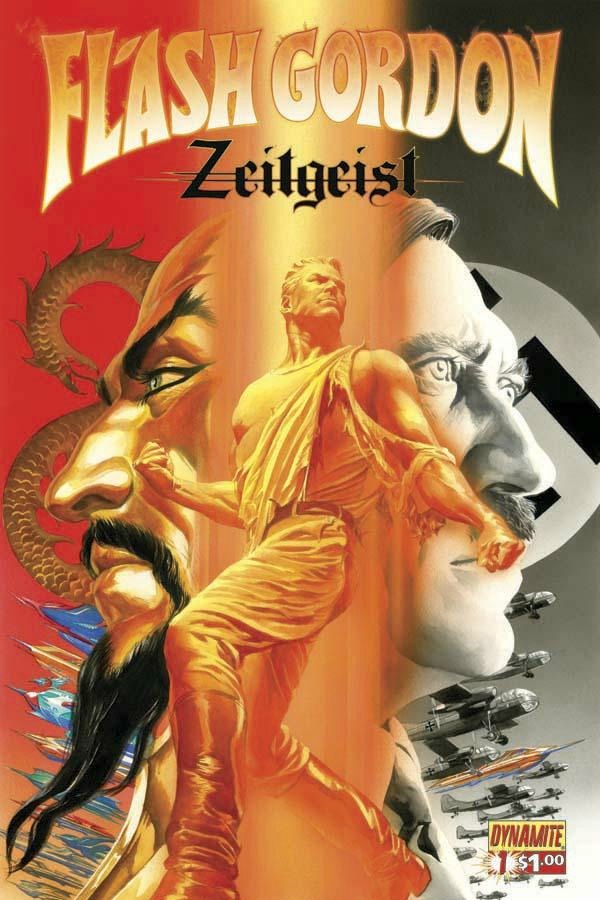
    While at the comic shop, I also snagged a copy of last year’s Flash Gordon: Zeitgeist.  Oh, origin stories.  At least this one moves quickly and gets into the meat of things.  Plus, working Hitler and the War into things works for me.  Like all singles, there’s not enough here.  A few pages, just enough to get you interested before it’s over.  I think I’ll look into grabbing a trade of this, though.  I like the art, and the general direction they seem to be taking things.


    After a month or more, I finally finished the first volume of Finder.  See my review here.


    I feel like I’ve gone comic crazy.  I’m not sure exactly why, though I do blame Lisa’s idea for a graphic novel reading group and Free Comic Book Day.  Oh, and living alone.  And not having a new NetFlix DVD that one day.  There are a lot of things that go into it, I guess.  Whatever the case, the last few weeks have been filled with short glimpses into various series, most of which I probably won’t ever try again.  But there were several gems and lots to keep tabs on.  And with my bike finally fixed, and the weather occasionally cooperating, I got some good cycling in.  My extra banged up knee is feeling it, but what are you gonna do.  Still holding out for something in chrome for a replacement.  Cobalt racing stripes?  Come on, roboticists.  I need my mechanical knees.


    Till then…

-Matt