Sunday, November 17, 2013

Book Review: A Manual for Creating Atheists


    You hear it all the time.  “Faith is a virtue.”  “You’ve just got to have faith.”  “Without faith there is no meaning.”  Peter Boghossian disagrees.  He takes great pains to separate the term ‘faith’ from the term ‘hope.’  And to clarify what atheism is.  Faith is the belief in something without evidence for that something, or ‘pretending to know things you don’t know.’  Whereas, like me, he sees atheist as meaning ‘there is insufficient evidence to belief in X deity.’  It isn’t a dogma or a belief system, just as a Buddhist doesn’t have a specific set of beliefs about there not being a Thor.  With this book Boghossian provides some handy hints on how to deal with those who claim to know things they don’t have know.  Unlike some before, he does not target religion, which he sees more as a social structure, but faith itself.  The root cause, and not the symptom.


    As he puts it, ‘faith claims are knowledge claims,’ statements about how things are (the world is 6000 years old, lightening was sent from Zeus, the Emperor of Japan is a god, Muhammad rode a flying horse, etc.), thus must be treated as such.  And when they are baseless, they must be challenged.  He also calls out relativists, who claim that other cultures either can’t or shouldn’t be subject to judgment or challenge.  Like Sam Harris, he makes the case that relativism isn’t a path to success.  Pluralism, the coming together and peaceful coexistence of many cultures is good, multiculturalism, having different rules for different peoples is bad.  Many ‘academic leftists’ seem to be willing to accept absolutely anything in the name of tolerance.  But both Boghossian and Harris have called them out on this sort of behavior.  If you claim that throwing acid in a little girl’s face or shooting her in the back of the head because she tried to read a book is OK, then you’re either A) delusional or B) profoundly evil.  And excusing this sort of thing because it is consistent with someone’s religion is immoral.


    Like Sean Faircloth in his book Attack of the Theocrats, he also calls out religious exemptions from the normal rule of law that applies to everyone else.  Be it taxes or bad behavior, too often faith based groups are given a free ride and legal protections they should not have.  But we are constantly bombarded with the message that criticizing faith is tantamount to racism and other egregious behaviors.  Because, as Boghossian says, ideas are now given a respect they shouldn’t have.  Attacking a person should be wrong, but attacking an idea should be encouraged.  Ideas deserve only as much respect as they can retain under assault.


    Boghossian takes on many of the common arguments for faith and against atheism, from the Kalam Cosmological Argument to Pascal’s Wager.  He gives categories for where people are on their journey away from faith, from those who have never been exposed to alternate ideas to those who are questioning, and beyond.  He doesn’t suggest that with one or two questions, one can make someone abandon years of indoctrination, nor necessarily should they.  But by presenting Socratic questions, by making a person take a moment to examine why as much as what they believe, you may have done a lot to break the spell.  As he brings up, while many people’s journey to faith is quick (a traumatic experience, for example), people’s journey away from it is often long and carefully thought out.  I think of my own, and I know that the journey away from faith for me took a very, very long time.  There were fitful leaps, but the whole process must have taken more than twenty years.


    Boghossian also encourages us to read up on various schools of thought.  He suggests reading the works of religious scholars like William Lane Craig and peddlers of what he terms ‘deepities’ like Deepak Chopra.  Listen to what others say, question them, challenge them.  Don’t insult the person, don’t try to make a person feel dumb or small.  Just be that voice of descent.  Ultimately the journey away from superstition and faith is a personal one, and should be encouraged and nurtured, but not forced.  And of course, don’t pretend to know what you don’t know.  Not knowing is perfectly OK.  Knowing that one doesn’t know is the beginning of the journey.  And in a life without faith, the journey is what it’s all about.  At least, that’s what mine is about.  I can’t speak for others.


A Manual for Creating Atheists
Author: Peter Boghossian
Publisher: Pitchstone Publishing
ISBN: 9781939578150 (I read this as an ebook)

-Matt

Comic Review: Boxers & Saints


    Set during the late 1800s, Boxers chronicles the rise of a peasant revolution.  Bao is a happy young boy who enjoys the opera and idolizes the masked characters and his father.  But his whole world begins to crumble when his father is beaten and broken by ‘foreign devils.’  When a jovial martial artist arrives in the village, Bao finds a way to embrace his love of the heroes of opera.  What follows is part history, part Shaw Bros. fantasy adventure, as the villagers learn to fight, gather around Bao, and head to the foreign tainted Peking.  Fueled by nationalism, racism, and the pains of oppression, the so called Boxers fight back against the soldiers of the outsiders.


    Saints follows Four-Girl, a child raised under a cloud of family tragedy and ill omen, who tries to find herself in a rapidly changing world.  In an attempt to rebel, and to embrace her ‘cursed’ nature, she joins the foreign devil Christians, taking the name Vibiana.  Her journey is different, but she too ends up in Peking when the rebellion comes to its bloody climax.


    Each volume explores the protagonist’s relationship with various aspects of religion, tradition, and gods.  Bao and his fellow Boxers are inhabited by the spirits of the heroes of opera, while Four-Girl seeks guidance from some horrible raccoon demon, and then from the spirit of Joan of Arc.  Are these possessions and visions real?  Are they the dreams of youth, or delusion?  Are Bao, Four-Girl, and the rest simply mad from the horrors of their times?  It gives you a lot to think about, and I think a lot of interpretive wiggle room.


    As companion volumes, Boxers and Saints make for a good read, each looking at different aspects of the same historic event.  Each complements and juxtaposes the other.  The colorful palette of Boxers and the muted tones of Saints for example.  And the question of religion, of its use, its dangers, etc. seems to be left open.  All this makes for a compelling read with plenty to think about.  And like the best books, it makes me want to read more.  I’ll certainly be reading Gene Luen Yang’s American Born Chinese.  But I also picked up a book on the Boxer Rebellion, and another on the Taiping Rebellion.  As much of my knowledge of China’s history and culture comes from martial arts movies and Hong Kong melodramas, I figured now would be a good time to read something more scholarly.  It should also help give me more context for enjoying those films.


-Matt

Tuesday, November 12, 2013

Brad's Week in Dork! (11/3/13-11/9/13)


Aren't women just the worst?  I spent most of this week wrapped in the shadowy pleasures of Film Noir and what I pulled away from these dark tales of woe is that a woman will most certainly be my undoing.  That's right, I'm watching you Wife!  Is that a revolver behind your back!?!?  Time to hide under the blankets.  Seriously though, I love watching saps get undone by dames.  Why is that?  I have no idea.  Some form of dominance I'm craving?  Gulp.  Don't like to psychoanalyze myself too much.  Whatever the case, Rita Hayworth can ruin my life anytime.


The Marvel Cinematic Universe continued this week as well.  Thor - The Dark World didn't take over my heart (RDJ still claims that real estate), but as we get deeper & deeper into the comic book mythos I find myself positively giddy for super heroes.  Since we all know what's coming down the pipe, Thor's mid credit tag was no real surprise, but it left me bewildered at the reality of next year's big summer movie.  Also, October might be over, but I'm plugging away at my Reverse-John-Carpenter-A-Thon with his greatest effort, The Thing.  I've seen it a million billion times, but I'm still wildly in awe of its power.  So yeah, maybe not the most packed Week in Dork, but I had a blast.  Need to get some reading done though.  Darwyn Cook's next Parker adaptation is almost here and I'm a few novels behind.


The Big Combo:  "Shoot yourself in the head, you'll make everything a lot simpler."  When Cornel Wilde's investigation into Richard Conte's numbers racket goes cold, he sets his sights on Conte's terrified girlfriend for some sleazy backstory evidence.  Wilde is a bit of a bore as the lead, but Conte's diabolical gangster is deliciously hateful and certainly makes this a must-see noir.  It doesn't hurt that Lee Van Cleef & Earl Holliman chew the scenery from the sidelines as a pair of hitman lovers quick to machine gun dames as they are to choke down salami sandwiches.  The climax apparently apes Casablanca, but it manages to strike a nerve all on its own.  Bullets, bastards, and fog.  Just what you've been craving.


Gilda:  "Women are funny little creatures."  I loved this movie.  Sure, it's a classic - you have to love it. It's one of those films that has lived in the pop culture consciousness for decades, but while the iconography of Rita Hayworth's hair flip appears over and over in critic's top ten lists, the details of the story are left unknown to the mass audience.  Gilda is a brutal, angry film that gleefully depicts the rage of a romance gone sour.  Glenn Ford finds a new life in George Macready's South American casino, but whatever happiness he has, is shattered when Macready's new bride reigns down some serious sexual terror.  I've loved a lot of Femme Fatales in my time (Gloria Graham, Barbara Stanwyck), but none are hotter or as mean-spirited as Rita Hayworth's dance hall moll.  I don't think I will ever really think of Gilda as a noir (the emotionally out-of-place climax stricken it from the genre), but the film has all the hallmark rat-a-tat dialog you come to expect, and it's delivered exceptionally between the battling sexes.


The Asphalt Jungle:  A solid heist flick directed by master filmmaker John Huston.  But if you compare this to The Maltese Falcon, The Treasure of the Sierra Madre, or even The Man Who Would Be King than The Asphalt Jungle certainly feels like a lesser entry.  Sterling Hayden is a street level hood looking to make some extra scratch by falling in with a group of thugs committing crimes above their intellect.  It's your typical collection of baddies populated by character gems like Louis Calhern, Sam Jaffe, James Whitmore, Anthony Caruso, and even Special Guest Star Marilyn Monroe.  The scheme would have gone swimmingly if not for the typical double crosses and downright bad luck.  Good, not great.


Thor - The Dark World:  It seems like I'm one of the few folks out there in Internetland that really loved the hell out of the first Thor film - in fact, pre Avengers, I'd say Thor is my favorite of the Marvel Movies.  I love how small it is.  Chris Hemsworth's Asgardian navigating the absurdity of Middle America and falling in love with Natalie Portman's dogooder scientist.  I really appreciate the low stakes of the story.  The world does not necessarily hang in the balance like it does it most tentpole pictures.   But Marvel listens to its audience.  You want more Asgard, you get more Asgard.  Not enough Loki, here's a whole lotta Loki.  The Thor sequel is a lot of fun, but it's also fairly ordinary is this comic book landscape.  The villain is certainly the weakest aspect of the story - The Dark Elves want to bring about absolute darkness using something called The Aether & what ties does it have with The Infinity Gems????  None of that really matters, it's a rather weak McGuffin that puts the God of Thunder back on Earth and in the arms of Portman.  The Dark World offers more of the Nine Realms and hints at the goofier science-fiction that will hopefully dazzle us in next year's Guardians of the Galaxy.  This is a fun sci-fi fantasy adventure in the spirit of Krull.  Is it a Marvel Masterwork? No, but the beauty of their cinematic universe is that not every film has to be The Avengers.  Bring on the talking trees and rocket raccoons.


The Thing:  "It's weird and pissed off, whatever it is."  I watch this film at least once a year, and will mostly likely do so until the day I die.  It is absolutely my favorite monster movie, and still ranks as my third favorite film of all time.  A shapeshifting E.T. is awoken from a centuries long slumber by a group of half-baked & totally cracked pirate scientists morally led by Kurt Russell's helicopter badass.  Half the film's fun certainly comes from Rob Bottin's still stunning makeup effects, but this film deserves its place among the All Time Greats because of the terrifying paranoia carefully cooked by filmmaker John Carpenter.  I can forgive a thousand Ghosts of Mars thanks to to power evoked by this not-so-simple monster mash.


The Visitor:  "Aren't you a cripple molester?"  Yep.  This is a weird flick.  And in that weird way only the Italians can produce.  I dare you to watch the Alamo Drafthouse trailer and tell me differently.  The film has something to do with an evil alien child, her mother, an evil cult led by Mel Ferar, and a good cult led by Franco Nero.  John Huston's Jerzy is the heroic babysitter of the piece while Lance Henriksen is the demonic stepfather commanding a murder of pigeons.  Glenn Ford stops by for a couple of scenes as a doomed detective, and Sam Peckinpah lends his face, but not his voice as the abortionist ex-husband.  The plot is secondary, but that's what you want when the visuals are so beautifully absurd.  What's it all about?  Who cares?  The style is the substance.  And I need this on blu ray now.


The Misfits:  "If it wasn't for all the nervous people in the world, we'd still all be eating each other."  The final film for both Clark Gable & Marilyn Monroe, Arthur Miller's The Misfits as realized by John Huston is Film Noir smashed into the dying Western that's preparing for the modern morality of the 1960s.  Monroe is a seemingly naive divorcee but reveals that Femme Fatale heart as she storms through the lives of Gable, Eli Wallach, and Montgomery Clift.  This trilogy of man is a real sorry lot, a group of studs desperately trying to stay outta wages and hold on to their irrelevant cowboy lifestyle.  At times, Monroe's performance borders on the shrill (please stop screaming), but more often than not she proves an actual talent and not just that pretty face from The Seven Year Itch.  I imagine, if given the opportunity, Monroe could have matured into a bevy of meaty roles.  Again, similar to Gilda, The Misfits feels like a story that wanted to take you down a much darker path than its actual conclusion allows.  The venom being fired from the characters is just too dang heated to result in a "happy" ending.


The Central Park Five:  I don't even know where to begin.  This doc will set your blood to boil.  In 1989 five black youths were arrested, bullied into five separate & wildly different confessions, and convicted of the rape of a young New York jogger.  It took 13 years for the truth to finally be revealed, but by that time lives had already been ruined.  Who do you blame?  The cops?  Certainly.  The Media?  Yeah, them too.  Mayor Ed Koch?  Yep, F that guy.  To hear Koch openly dismiss the concept of "Innocent Until Proven Guilty" on the air is mind numbingly enraging.  I'd love to think that something like this couldn't happen today, but you know that's a falsity.  The Central Park Five is a great reminder of the casual evil committed by us all every time we nod our heads to the nightly news.


--Brad

Sunday, November 10, 2013

Matt’s Week in Dork! (11/3/13-11/9/13)


    As the year draws to a close, I’m trying to see some of the various movies I missed for whatever reason.  But, as each one kind of sucks, I’ve also been descending more and more into my obsession with old films.


The Big Combo:  Rough, tough, and mean.  The Big Combo has the requisite cracking Noir dialog, ugly brutality, and dripping (though obscured) sexuality.  It even features gay hitmen (though it never comes out and says as much, it’s quite clear) played by Lee Van Cleef and Earl Holliman.  Cornell Wilde is the sucker.  Richard Conte is the smarmy villain.  Great stuff.


    On Sunday night, as I was recovering from HestFest, Brad and I went out to the Alamo Drafthouse to see Gilda.

Gilda:  My second viewing of Gilda, no doubt effected by seeing it on the big screen, made me enjoy it much more than my first time ‘round.  The dialog is awesome, with Glenn Ford so amazingly hateful and cruel.  Rita Hayworth is obviously gorgeous, but she’s also delightfully nasty.  And their constant war of words, looks, and implications is a joy to watch.  Unfortunately, the last third of the film, though it features some cool scenes, goes way off the reservation, dropping the overall quality of the film.  It feels like studio interference.  Still, a good movie.


Doctor Who: Survival:  And I’m done.  Gah.  The final story of the classic Doctor Who series is one of the better of the Sylvester McCoy era (even though it features The Master).  But that still only puts it up there as a mid-level arc.  I completely understand why the show was cancelled, and why its popularity had slumped.  From the last season of Colin Baker to the end, there are few rays of light.  This one features horse mounted cat people and some listless British youth.  It’s also quite short, being only three episodes long.  So, it doesn’t outstay its welcome.  For the last couple years, I’ve been on a quest to rewatch Doctor Who from beginning to end, in as close to order as I could do (what with the gaps and with stories being released after I’d passed that point), and it’s been fun.  But I’ll admit, the last four years of the show are, for the most part, really awful.  And I’m more and more convinced that many of the worst aspects of the new series were birthed during this time.


The Virgin Spring:  Stark, beautiful, haunting, disturbing, and maybe a bit challenging.  The Virgin Spring deals with Paganism, Christianity, savagery, and the sublime.  It features one of the most horrendous and squirm-inducing rapes ever put to film.  The cast is excellent.  The cinematography is gorgeous.  A fine film, but not an easy one.


The Purge:  When I talk about ‘what’s wrong with modern horror’ I’m talking about this film.  Or, this film is exactly the sort of thing I’m talking about.  Here’s a pretty solid idea for a movie (if 30 years too late to feel relevant); society was on the verge of collapse, due to rampant crime, so a radical change was made, creating a once a year suspension of the law.  For one twelve hour period each year, people can do whatever they want, kill whoever they want.  Reveling in this violence isn’t just accepted, it’s considered a person’s patriotic duty.  OK.  Cool.  This could be the basis of something really good (and was, in a classic Trek episode).  Unfortunately, the script feels like it didn’t get much beyond the rough draft phase.  The characters aren’t even nuanced enough to be one dimensional.  And every time anything is about to happen, you’ll find yourself saying, ‘ah, here’s is the scene where they do this thing.’  Everyone is exceptionally stupid, doing the dumbest thing at the worst time in order to move the plot along.  And that right there is the key problem with most horror films made since the end of the 80s.  Lazy writing has created an industry standard that allows for characters to do whatever the writer needs to get the action going.  X person is perfectly safe, with no danger of ever being hurt whatsoever, as long as they just don’t turn that knob…so, what’s the first thing they do?  Yup.  Turn the knob.  EVERY TIME.  I’m so sick of this bad writing.  So sick of it.  And if that wasn’t enough, the whole film is shot…say it with me…hand held.  Yes, that’s right.  Everyone’s favorite; the shaky cam.  Are you tired of being able to tell what’s going on?  Are you sick of having some frame of reference?  Well, worry no longer, this movie jitters and shakes, while someone having a seizure waves a flashlight, so you’ll have no friggin clue what’s happening.  Yay!

Here comes the suck.

The Magician:  I need to watch this movie again, as I was half passed out during much of it, but the film is certainly odd.  I’m still fairly new to Bergman, having only seen three of his films to date.  And this one feels more like The Seventh Seal than like The Virgin Spring, a bit more surreal and ‘theatric.’  There were some things I liked, and it warrants a second look.  So in a year or so, I think I’ll try watching it again, and see if I like it more then.


World War Z:  I would absolutely hate to think that the collection of morons and twits they assembled in this film might be in some way responsible for saving civilization.  Every stupid-ass choice, dumb decision, and foolish move seems to be the first done.  Bloody idiots.  Getting past the obvious moronic choice of the producers to abandon the book (which probably could have made a compelling basis for a film), and the appalling CGI zombie ant-swarm effects, and the crappy PG-13 pseudo-violence, I can not get past how idiotic everyone is, and how kinda boring the whole thing ends up being.


Renoir:  “He always makes me look like a girl.”  The Great War is raging, and old painter Renoir is hold up in his beautiful rural home, painting and torturing himself over his two sons who are off at war.  It is strange to see the idyllic setting and the sad, out of touch old man, knowing the horrors that were raging.  Family conflicts and old wounds are observed by a new model who arrives at the direction of Renoir’s recently dead wife.  The movie is quiet and quite beautiful, the gorgeous countryside and the stately old home make me wish I’d stuck with painting.


Summer Interlude:  “Nothing means anything in the long run.”  A successful, but aging dancer (they get ‘old’ while still quite young) is haunted by the wonderful and sad memories of a Summer spent on an idyllic island.  Her fickle, petulant younger self had a sweet, but also brutal love affair with a serious young man.  The scenery is amazing, the wistful look back at vacationing drips with nostalgia, the mistakes we make when we’re young, and the regrets we have when we get older.  It’s tragic, sad, and beautiful.


I Married a Witch:  “Did you ever have one of those days when just…nothing seems to go right?”  An odd, madcap comedy.  I can’t say it’s great, but it’s sure weird.  A goofy old warlock and his daughter who were stuck in a tree for a couple centuries get unleashed on the modern world, and hijinks ensue.  Not sure that it deserves a place as a great classic, but it’s a fun, light entertainment.


    Other than doing some more general reading of this and that, that was my week.  Not especially exciting, but not completely unpleasant.  The biggest thing was when I finished the run of classic Doctor Who.  Though the end of the series was pretty bad, thinking back over the whole run reminded me of a lot of the great stuff.


-Matt

Saturday, November 9, 2013

Dork Art: Austin Purser’s Travel Posters


    I love retro travel posters.  There’s a wonderful, hopeful exuberance to their simplistic and colorful technique.  They put me in a certain mood, a mood I enjoy living in.


    So, seeing these awesome retro-style travel posters to various literary lands and worlds is quite nice.  I think Austin Purser has captured the flavor quite well, and I like the variety of locations he’s chosen.


     Anyone looking for a Christmas present for this Dork could sure do worse (hint: I'd love to see Yuggoth this time of year).

-Matt

Tuesday, November 5, 2013

26 Seasons of Doctor Who


    If you read the blog regularly, you’ll know that I’m quite the Doctor Who fan.  If not, you can believe it's true.  And no, not the Johnny-Come-Lately ‘isn’t David Tennant so awesome,’ 'bow-ties are cool' Doctor Who fan.  I’m not against the new show by any means, though the last few seasons have kind of sucked.  But I’m a classic Who fan through and through, and I have been since watching Robot (Tom Baker’s first) on MPBN Channel 12 in Bangor, ME some time in the early to mid 80s (Bernie Roscetti was a superstar, man).  It’s been a favorite ever since.  As a youth, I would devour every new story every Saturday afternoon (occasionally Sundays).  They would play full stories, so it might be on for 90 minutes or 2 ½ hours, depending.  I loved the Tom Baker years, was confused when Peter Davision came on, and didn’t like that curly haired guy (Colin Baker).  When it started over, going back to the original William Hartnell era, I lost track.  I didn’t respond to his ornery old crank attitude, and the slower pace, but still saw stories here and there, as they showed a handful of Hartnell and then Troughton.  I think I was more into it again when Jon Pertwee came on, but only got excited again when it returned to the Tom Baker years.  On the next cycle through, I saw Sylvester McCoy, and I was shocked and upset to learn the show had been cancelled.  How could this be?


    When I got NetFlix about six years ago, I was enjoying the early episodes of the new series (Christopher Eccleston is still my favorite of the new guys) and thought I’d start watching some of my favorite classic stories, and some I had never seen.  This was when I started to understand the depth of what had happened to Who, with the loss of so many early episodes.  So much of Hartnell and almost all of Troughton seemed to be missing, possibly forever.  I don’t know what prompted me, and I don’t know when I decided.  But about two or maybe three years ago, I started trying to get more systematic about my viewing, organizing the disks by their proper chronological order.  I was off on a multi-year journey to cover as much of Doctor Who’s classic run as I could, with what was on the market and what was available through NetFlix.  Seeing a lot of the stories for the first time in 25 years, and some for the first time (not to mention behind the scenes info and interviews), I came to a new understanding and appreciation of the series.  I found myself responding more to Hartnell and Troughton than ever before.  William Hartnell is still a challenge.  The show was finding its feet.  The character was very different and most of the rules and larger concepts were missing.  And it wasn’t uncommon for stories to become repetitive, awkward, and yes, boring.  But there was plenty to love.  And once Susan left, the companions were less annoying.


    There are so few stories from the Patrick Troughton years, that I hardly feel like I can say much, but I liked Jamie and Victoria a lot as companions, and those stories that do exist seem pretty good.  But the real discovery was with the beginning of Jon Pertwee’s years, where I took an immediate liking to the man in a way I never had before.  He’s more dashing and brazen, more active and willful.  And there's a wistful bitterness that I connect with.  So, while the writers and budget kept the Doctor on Earth for much of this time (erg!), and The Master showed up, I found Pertwee catapulting to the top of my favorites list.  Which reminds me, this re-watching of the series convinced me that I can’t bloody stand The Master.  He doesn’t fit.  His episodes are usually lame.  On occasion, he even shows up in a good story, promptly ruining it.  The mustache twirling villain might have worked once in a great while, but as a regular recurring character, it sucked.  I’d argue that the show didn’t need a recurring villain, but if it was going to have one, it needed to be a better one.  It was also during this time, and serving as a bridge into the Tom Baker years, that Sarah Jane Smith shared adventures with the Doctor.  Having recently seen her guest on the new Who, and then get a successful, youth-aimed, spin-off series that I liked quite a bit (and was overall, much better than Who’s other spin-off, Torchwood), I was psyched to see her in her younger days again.  But while I’d liked her a lot when I was a boy, I found her wanting as a companion, now that I’m an adult.  She’s more screamy and prone to being captured than I remembered, which is jarring when comparing her to the brassy, tough woman she is in The Sarah Jane Adventures.


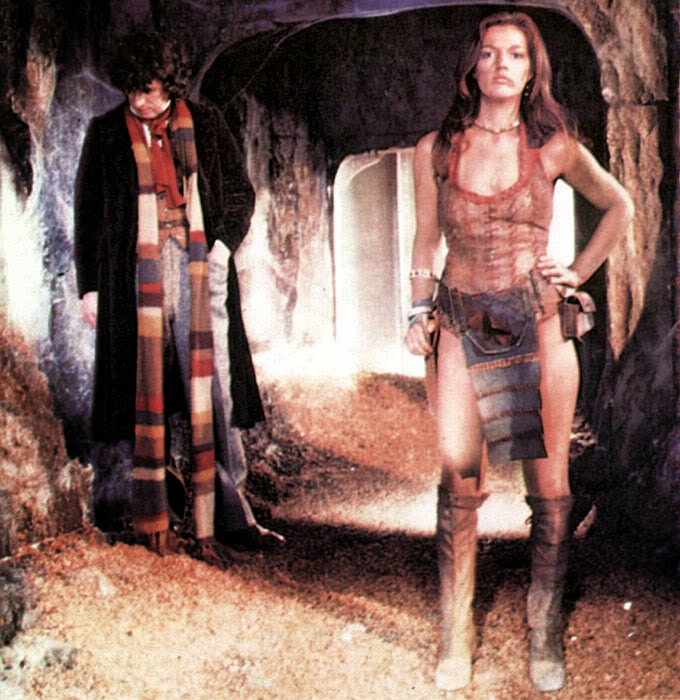
    Tom Baker is a colossally dominant figure in Doctor Who’s history.  More than any other actor, I think he is the face of the show.  He was my Doctor for the longest time, the man I judged all others by.  His time on the show was its golden age, with many of the most memorable characters and episodes.  The broad appeal and outright madness of the series while he was on can not be overstated.  From 1974 to 1981, his freakish face, wild mop of hair, and eccentric behavior re-wrote the book on a character that had then been on TV for more than 10 years.  He traveled with the best companion of all time, Leela, a warrior woman from a horrible future.  He traveled with two regenerations of a lady Time Lord.  He even found a boy from another reality.  This was the show at its absolute height.  Sure, there were lame stories.  And absolutely, there were great stories from other times.  But this was a glorious time, when the writing and production, the cast and crew all came together.  Upon my re-watching of many Tom Baker stories, I find that I’m not the sycophantic fan I once was.  Some of his mannerisms I find off-putting, and there are choices in some of the episodes that I think haunt the character to this very day (it also gets awkward trying not to look at his poorly covered cold sores).  Still, it was a great time, and more than any other era of the show, the Tom Baker years are probably the best jumping off point to try watching the classic series.  I don’t know that I’d recommend starting with Robot.  I think Genesis of the Daleks, The Face of Evil (introduction of Leela), or The Ribos Operation (beginning of a season long Key to Time arc, a nice sampling of what the show has to offer, while a larger story is told) would work best.


    After Tom Baker, things get weird.  The show takes on a very, very different feel when handsome young Peter Davison shows up in his dandy cricket outfit, putting a shockingly different spin on his interpretation of the character.  I was surprised to find myself enjoying Davison in the role more than ever before, and that I kinda liked the much maligned Adric.  But Davison is also saddled with one of the worst companions of the whole show (rivaled only by Susan, I think), Tegan.  Everything about that woman annoys the ever loving crap out of me, and every time it seems like she’s leaving the show, she doesn’t.  Argh!  Following Davison, you’ve got the most reviled actor to take up the mantle, Colin Baker.  The show was in trouble, the writing was wildly uneven, and the actor was challenging.  But I think Baker reached for something greater.  He picked up on some of Tom Baker’s edgy darkness, but also on some of Jon Pertwee’s daring do.  Possibly the biggest shock I got in this journey was the discovery that I really, really liked Colin Baker as the Doctor.  Unfortunately, his final season is a turd sandwich, and the beginning of the end of the show.


    That brings me to Sylvester McCoy, and profound disappointment.  I hadn’t seen any McCoy episodes in many years, possibly not since they originally aired on Channel 12 circa 1990.  But my memory of them were pleasant.  Alas, my memories did not prove to be accurate.  Suffering through Mel, the perkiest, most aggravating of companions, you quickly notice that the writing is lacking.  Sure, there are a couple stories that ooze with 2000AD’s punk, pitch black humor.  But for the most part, they’re just bad.  And when Ace shows up, it’s a welcome change, but not enough.  I remember her being a take-charge tough girl who didn’t let the baddies get the drop on her.  However, while she doesn’t spend her time screaming, she isn’t nearly as useful and independent as she should be, and the real problem brings us back to the writing.  The Doctor is all over the place, from the dark edge of Tom Baker to the loveable vagabond of Patrick Troughton, and all points between; each episode feels like a whole new character.  Somewhere in these few seasons of the show seeds were planted that wouldn’t germinate for many years.  It is here that the deeper problems with the new series seem to begin.  The over-melodramatic stories, the attempts to raise the stakes so high that they don't mean anything anymore, the deus ex machina cannon being fired off every ten minutes.  And so many episodes that try to cram in far too many disparate things.  With very few exceptions, McCoy’s tenure on the show is painful to watch, and a sad bleeding out of a once great show.  By the last few stories, I was having a hard time going on, and just wanted it to be over.  The final story, Survival didn’t suck, and that’s about the best I can say for it.


    Final disappointments aside, it’s a great show, with years and years of fascinating characters, creatures, worlds, and stories.  From comedy to horror to adventure to mystery, so many different types of plot were explored, it always keeps you guessing.  The confused, jumbled, and less than consistent universe it presents is one of the most impressive sandboxes my mind has ever played in, and along with Star Trek, it will doubtless remain one of my all time favorite shows, a pillar of Science Fiction television.  Seeing the many ups and downs of the series over its long run gives me hope that the recent spate of crappy episodes from the new show are just a phase, and things might get better again.


    I’m glad to see new generations of folks coming to Doctor Who, and I hope some of them explore and appreciate what came before the re-launch.


-Matt

Sunday, November 3, 2013

Matt’s Week in Dork! (10/27/13-11/2/13)


    This time of year just isn’t fun for me.  The holidays, sadly, lost all charm when I started working in corporate retail back in 2001.  It’s just a brutal slog through frustration, anxiety, exhaustion, punctuated by occasional soulless expenditures.  Is that cynical?  Sure, I guess.  But whatever, I’m tired.  Still, my Dork Life gives me some joy, and this week had a lot of good in it.  And it started early Sunday morning when I watched an unexpectedly good Robert Redford (Zzzzzz) movie.


All is Lost:  With all of maybe five lines of dialog, this movie is about watching Old Man Redford in a Series of Unfortunate Events.  Some bad choices and a lot of bad luck send our hero into a spiral of diminishing options as he battles nature and the refuse of Man.  The movie looks really good and has some thrilling adventure bits.  It also doesn’t tend to drag, as a film like this might easily do.  Near the end, things get a bit tiresome, but it’s still not bad.  I did find myself nitpicking a bit.  Why wait until everything was going horribly to start making preparations for it?  That tool you’ve got has a hook/lanyard on it for a reason, why don’t you have it secured?  It’s raining and you’ve got no power; why aren’t you collecting water?  Still, overall, the movie is quite effective, and if you can turn off that over-critical part of your brain (I usually can, and honestly it only started to come out a few times during the film), it’s very tense and frightening.  Yet, there are scenes (that shot of him steering during the storm) that make me want to brave the elements for a bit.  That said, if I ever sailed around the world or whatever, I’d still follow the Buddy System.  Not gonna do that sort of thing alone.


War of the Gargantuas:  Another fun Toho slice of kaiju madness, this is a really weird sequel to Frankenstein escapes.  A lot of the usual notes are hit, but it’s a lot of fun, and there are some crazy fights.  It’s interesting to see slightly smaller kaiju, so the structures they’re bashing are comparatively larger.  They can actually hide behind trees and buildings, for example.  The titular Gargantuas are powerfully ugly, hairy things, but human than many Japanese monsters.  I guess this lends them a bit more personality …maybe?


Escape Plan:  If this were 1991, and Escape Plan was the latest straight to video movie featuring Christopher Lambert and Lorenzo Lamas (no doubt Lance Henriksen playing the villain), then the world would make some sense.  But this is 2013, and Escape Plan is so off the mark, it’s like a cautionary tale on how not to do a movie.  The script starts bad and gets worse.  The one-liners, the ones that make any sense, suck.  The plot is like an episode of Silk Stalkings or Viper.  And the two leads…well, they’re just not acting their age.  If you know me, you know I love watching old dudes kick ass.  But in an old dude way.  These two are trying to play it like the young guys, and it just looks bad.  And as with Bullet in the Head and The Last Stand, it commits the cardinal sin.  It’s boring.


The Counselor:  Sometimes you see a movie, and it’s just so danged odd that you know you’re watching something special.  Maybe not something good, but something special.  That was the case with The Counselor.  It’s a darned peculiar film.  One thing you’ve got to know is that it’s an extremely, intensely mean spirited movie with an exceptionally ugly view of people that does not let up.  So if you think that might bother you, skip it.  There’s also a tendency toward obscure speeches.  Oh, and much of the plot or whatever is not explained, much less who most of the people are or what they’re doing.  But every frickin’ moment of Javier Bardem is like pure distilled mountain genius being pored into your brain.  I can see why people weren’t thrilled with the movie.  It’s challenging, and not just because it’s hard to follow or figure out.  It’s an ugly, rough, tough movie along the lines of late Peckinpah, where there are no good guys, just a bunch of unhappy people doing unkind things.


    I watched some of the new SyFy series Defiance.  I kind of want to like the show, but they’re making it hard.  There are some very cool things, nice ideas, some nice visuals, etc.  But I can’t help noticing how often it falls back into typical, cliché plot-lines, characters, etc.  You’ve got the Romeo & Juliette couple, the mobster trying to go straight, the whore with the heart of gold, the rugged soldier whose only weakness is his kid, and that kid is an orphaned alien (or insert war-torn region’s ethnicity).  There’s the vision-plagued character who may also be the ‘chosen one’ character, who is also the emotionally broken, deceptively cute, tiny woman who is actually a badass warrior (and is also the afore mentioned orphaned alien…they really heaped the clichés on that character).  And the list goes on.  It’s also another Sci-fi mixed with Western thing, which wasn’t even close to new when Firefly did it a decade ago.  Oh yeah, and there’s an evil government from ‘back east’ that is trying to get its hands on the wealth and power of the independent city that is the center of the show.  And there are savage alien tribes out in the badlands.  I mean, it just throws the overused ideas at you left and right.  Yet, for all its many faults, I’m finding myself watching episode after episode.  I keep thinking back to how iffy the first season of Farscape was, and how good that got.  Can this do the same?

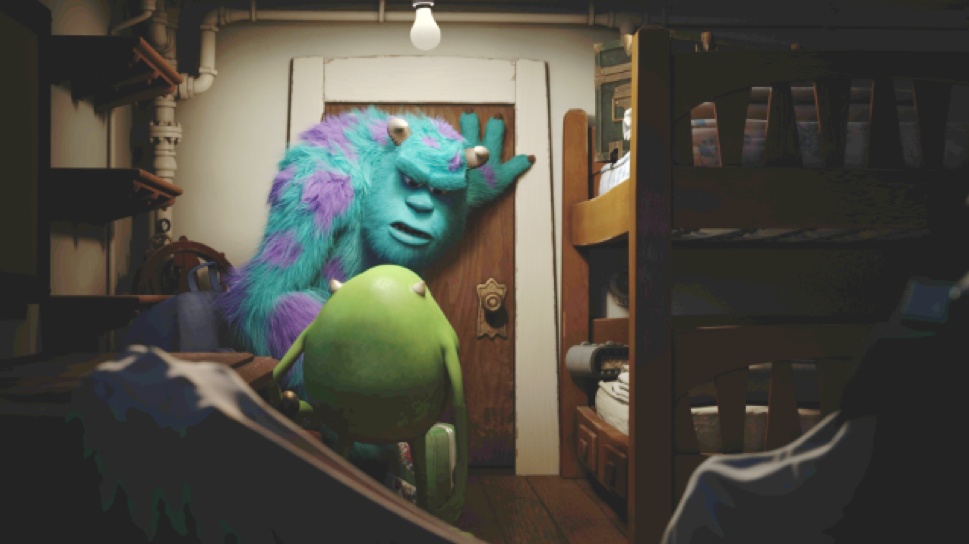
"Hi. You may remember us from a dozen other shows."

Monsters University:  It’s cute, and if you’re a fan of the first film, it’s fine.  But it’s also not all that interesting.  For a Pixar film, it’s kind of …meh.  Which, sadly, seems to be their new norm.  Sad.  The kiddies should find plenty to enjoy, but the adults might be a bit bored, as there’s precious little meat.


    On Saturday morning, my annual Charlton Heston film fest, HestFest began with Brad and I, and a basic breakfast of bacon, eggs, toast, and coffee.

The Big Country:  Gregory Peck shows up in the middle of a clan war and is mistaken for an East Coast dandy.  Two families have been in conflict for as long as they can remember, and they don’t have any patience for a man who isn’t concerned with honor and appearances.  His romantic rival, Charlton Heston, thinks he’s a coward because he won’t brawl.  His fiancé is drowning in daddy issues.  And creepy rapist wannabe Chuck Connors thinks…well he doesn’t think all that much.  But Peck doesn’t care.  He just takes his time, does his thing, and rises above.  Peck plays one of those classic movie heroes whose lessons have been largely forgotten in our knee-jerk, anti-intellectual public arena, that morality doesn’t come from old books or from the opinions of others.  Morality is what you do when nobody, god or man, is looking.  The film also features one of the great cinematic fistfights.  Unfortunately, it’s about 40 minutes too long.  The final confrontation between families, ostensibly over Jean Simmons (but she’s just an excuse), drags and drags, and doesn’t really pay off.  For me, the movie is kind of over when Heston realizes what kind of a man Peck really is.  That’s the point of the movie, I think, and once it’s been made, there isn’t all that much more to say.


    For Khartoum, I broke out some horseradish chips.  …What can I say, I didn’t think to get anything for this movie.  Oops.

Khartoum:  There are things I really like about this movie.  But they are few and far between.  The location shooting is quite nice.  Heston is fine.  The ending stand-off is cool.  Otherwise, it’s kind of a dull exercise in hitting the expected notes.  It feels like a desperate grab at the success, four years earlier, of Lawrence of Arabia.  But I never found the film especially engaging, and (apologies to the rabid fans) Laurence Olivier sucks…bad.  Every scene he’s in grinds the film to a halt.  I watched the movie years ago when I picked up the DVD, and I remembered not being thrilled with it.  Sadly, my second viewing reinforces that opinion.  It’s not terrible, but it’s too long and not very exciting.


    Peanut Better sandwiches were served for a light lunch.  Peanut butter was a food Heston took with him whenever he traveled overseas, because, apparently, you can’t get it in many places, and it was something he had to have.  I also broke out the rum (pirates, man) and some sea-salt & cracked pepper chips…you know, ‘cause of the ocean and stuff.

The Buccaneer:  Yul Brynner as a pirate captain living in the bayou near New Orleans?  Charlton Heston as Andrew Jackson?  How could it possibly fail to be amazing?  Just watch and find out.  Brynner is an actor I generally love, even when he’s in bad films (The Ultimate Warrior!).  But he’s so boring in this movie, he seems to be sleepwalking through.  The middle part of the film, involving a boring love story and some back stabbing officials, as well as some pirate politics, is just dull.  The best parts of the film are when Heston shows up, but that’s just the first few minutes and then near the climax.  The film was originally conceived as a musical, and more than many movies of the era, it really looks like a musical.  The colors, the costumes, the sets.  The soundstage work is so unreal it felt like an artistic choice to lend the film a fantasy vibe, but that doesn’t make much sense with the film’s content.  Other than Heston’s Jackson, the movie’s only other major selling point is that it’s about the War of 1812, and how many movies can make that claim?


The Last Hard Men:  Well, they’re men, and they’re hard.  Some brutal prisoners, led by James Coburn, escape a chain gang only to run into fresh-out-of-retirement lawman Charlton Heston.  What follows are a series of nasty confrontations and dastardly deeds, leading to a confusing and ugly finale.  The movie fully embraces the ugly meanness of the 70s, where even the heroes are scumbags, and the scumbags are worse than animals.  And unfortunately, Chris Mitchum.


    For The Agony and the Ecstasy, I served noodles with a meat sauce provided by Jill and Nero d’Avola wine.  Italy, man.

The Agony and the Ecstasy:  The lavish spectacle of the film competes with the lavish spectacle of the reality, in this adaptation of the classic novel about a genius artist and a bellicose pope.  Like many movies from this era, there’s a certain cleanness that I find slightly jarring.  Even its messes are clean.  The people are a bit too iconic, and some of their shades of grey were taboo, as the Hayes Codes were only just losing their grip on Hollywood.  But the issue at hand, the struggle of the artist with his benefactor, that created one of the most iconic pieces of art in history, is compelling, whatever the shortcomings of political and personal detail.  Italy during this era was a fascinating and multifaceted thing, a puzzle box of twisting history with connections and disconnects to birth countless stories.  I guess I can’t expect one movie to have them all.  Heston and Harrison play well off each other, and there are moments of emotional power, for sure.  My viewing of the film was not ideal, so sometime coming up, I’m going to have to give it another, more focused watch and see what I think then.


    With the beginning of Soylent Green, I broke out the seaweed snacks, which made for a good tie-in.  Those things are good, and so few people are willing to try them.  Still, more for the rest of us.

Soylent Green:  The world is winding down, burdened by the weight of too much Humanity in this ugly vision of a horrible, slow-death future.  Everything is bleak, social justice is dead, the world is burning up, and nobody’s got anything to eat.  The wealthiest few still manage to live in luxury, while the huddled masses suffer through drab, meaningless existence, and only those willing to sell their souls and bodies to the rich get any taste of fleeting happiness.  With the murder of a pampered rich man, a cop enters the world of the powerful and begins to unravel a mystery that is too much for most people to bear.  Everyone is a whore in this film, selling themselves for scraps from the table of powerful people; who are themselves driving the whole world into ruin, and willing to do anything, make people believe anything, to keep their positions of power, no matter what the cost.  Who’d have thought?  The film still resonates today.


    For next year, I need to remember to start the day with more chips.  Early on, every time I opened a bag of chips, it was gone in an instant.  But, by the time most people started showing up, and bringing more, the chip eating rate balanced out and all was well.  Next time, start with more.  I can do that.  Otherwise, I think HestFest 2013 went very well, and I feel pretty good about it.


-Matt